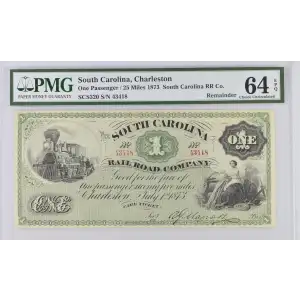
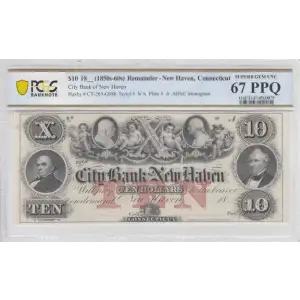
$20 Obsolete

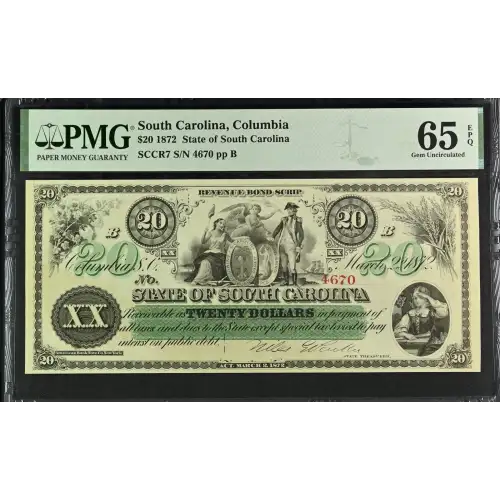
The $20 1872 South Carolina, Columbia MS 65 is an exceptional example of post-Civil War American currency that represents a significant chapter in United States financial history. This collectible paper money note showcases the craftsmanship and design sensibilities of the Reconstruction era, making it a prized addition to any numismatic collection. With its MS 65 Gem Uncirculated grade, this note exhibits outstanding preservation and eye appeal that collectors seek for investment-grade currency.

Overview of the 1872 $20 Note

This particular $20 note originates from Columbia, South Carolina, during a pivotal moment in American history. The note's production in 1872 places it within the immediate aftermath of the Civil War, a period of significant reconstruction and renewal for the nation. The South Carolina connection adds geographical and historical context that makes this piece particularly meaningful to regional collectors and history enthusiasts alike.

Historical Significance and Context

The 1872 $20 note emerged during the Reconstruction period following the Civil War (1861-1865). This was a time when the United States was working to reunify and stabilize its financial systems after years of conflict and disruption. The inclusion of Columbia, South Carolina, in this note's designation reflects the state's role in this transformative period of American economic recovery.

Key Historical Details:

  • Era of Production: 1872 — Seven years after the conclusion of the Civil War
  • Location: Columbia, South Carolina — The state capital and a significant commercial center
  • Denomination: $20 — A substantial sum for the period, often used for major transactions
  • Currency Type: National Bank Note — Part of the National Banking System established in 1863
  • Grade: MS 65 — Gem Uncirculated, indicating exceptional condition and minimal handling
  • Period: Reconstruction Era (1865-1877) — A transformative time for American finance and infrastructure

Understanding the $20 Denomination

In 1872, a $20 note represented significant purchasing power. To put this in perspective, the average worker earned approximately $1 to $2 per day, making a $20 note equivalent to roughly two weeks' wages. This denomination was used for substantial purchases, business transactions, and significant financial dealings. The quality and design of $20 notes reflected their importance in the economy.

Condition and Grade: MS 65 Gem Uncirculated

The MS 65 grade assigned to this note indicates Gem Uncirculated condition, representing one of the finest states a collectible note can achieve. This grading places the note among the top tier of preserved currency from its era. Notes in this condition display vibrant colors, crisp paper quality, and minimal imperfections that would be visible to the naked eye.

What MS 65 Means for This Note:

  • Minimal Handling: The note shows virtually no signs of circulation or use
  • Original Color: Inks and paper retain their original hues with exceptional brilliance
  • Sharp Details: All printed elements, including portraits, vignettes, and text, remain crisp and clear
  • Paper Quality: The paper exhibits its original texture and integrity
  • Exceptional Eye Appeal: Collectors prize MS 65 notes for their aesthetic beauty and investment potential
  • Rarity Factor: Few notes from 1872 achieve this level of preservation, making them highly sought after

Columbia, South Carolina Connection

Columbia, designated as the capital of South Carolina in 1786, played a crucial role in the state's post-Civil War recovery. As a major commercial and governmental center, Columbia was instrumental in the economic reconstruction of the South during the 1870s. Notes issued from Columbia reflect the city's importance as a financial hub during this transformative period.

The city was heavily damaged during General William Tecumseh Sherman's March to the Sea in February 1865, making currency issued there in 1872 particularly symbolic of the nation's recovery and renewed economic activity in the Reconstruction South.

National Bank Note System

The $20 note from 1872 is classified as a National Bank Note, part of a system established by the National Banking Act of 1863. This system was designed to create a more stable and unified currency throughout the United States. National Banks were chartered by the federal government and authorized to issue their own currency backed by U.S. Treasury bonds. This system represented a significant innovation in American finance and helped standardize the nation's money supply.

Features of National Bank Notes:

  • Issued by chartered National Banks throughout the country
  • Backed by U.S. Treasury bonds held by the issuing bank
  • Featured standardized designs with the bank's name and location
  • Included security features to prevent counterfeiting
  • Circulated as legal tender throughout the United States
  • Many were eventually removed from circulation and destroyed

Design and Artistry

The $20 notes from this era featured elaborate engravings and detailed vignettes created by skilled engravers. These designs served both aesthetic and security purposes, incorporating portraits of notable figures and allegorical imagery that reflected American values and ideals. The artistic quality of these notes is remarkable, with fine line work and intricate details that demonstrate the high level of craftsmanship employed in currency production during the 19th century.

Investment and Collectibility

This particular $20 1872 South Carolina, Columbia MS 65 note represents an outstanding investment opportunity for serious collectors. The combination of its historical significance, exceptional condition, and relative rarity makes it highly desirable in the numismatic market. Notes from the Reconstruction era, particularly those in Gem Uncirculated condition, continue to appreciate in value as collectors recognize their importance as artifacts of American history.

Why Collectors Seek This Note:

  • Historical Importance: Represents the Reconstruction era and American economic recovery
  • Regional Significance: Connects collectors to South Carolina's post-Civil War history
  • Superior Condition: MS 65 grade represents exceptional preservation
  • Rarity: Most notes from this period were removed from circulation and destroyed; survivors are scarce
  • Aesthetic Appeal: The note's design and color make it a beautiful display piece
  • Established Market: 19th-century currency has a well-established collector market with consistent demand
  • Portfolio Diversification: Offers an alternative to traditional investments

Years of Production and Availability

The $20 note denomination was produced from 1862 onwards as part of the National Bank Note system, but notes specifically from 1872 represent a particular snapshot of post-Civil War America. Production of these notes was completed by the National Bank that issued them, with surviving examples becoming increasingly scarce as the decades passed. The 1872 date places this note among the earlier years of National Bank Note production, adding to its historical significance.

Many notes from this era were intentionally removed from circulation as banking practices evolved and the Federal Reserve System was eventually established in 1913. This destruction of currency means that surviving examples, particularly in high grades like MS 65, are significantly rarer than their original production numbers might suggest.

Preservation and Display

Collectors of this $20 1872 South Carolina note will appreciate its exceptional state of preservation. The MS 65 grade indicates that this note has been properly cared for, likely stored in appropriate acid-free holders that have protected it from environmental damage, fading, and deterioration. When displaying or handling this note, proper conservation techniques should be maintained to ensure its continued preservation for future generations.

Conclusion

The $20 1872 South Carolina, Columbia MS 65 collectible paper money represents a remarkable convergence of American history, artistry, and numismatic value. As a genuine artifact from the Reconstruction era, issued from Columbia, South Carolina, and preserved in exceptional Gem Uncirculated condition, this note deserves a place in distinguished collections. Whether you're a seasoned numismatist, a history enthusiast, or an investor seeking alternative assets, this piece offers authenticity, beauty, and historical significance that transcends its original monetary value.

Product ID 562185
Series Year 1872
Country United States
Denomination $20
Grading Agency PMG
Grade 65 EPQ
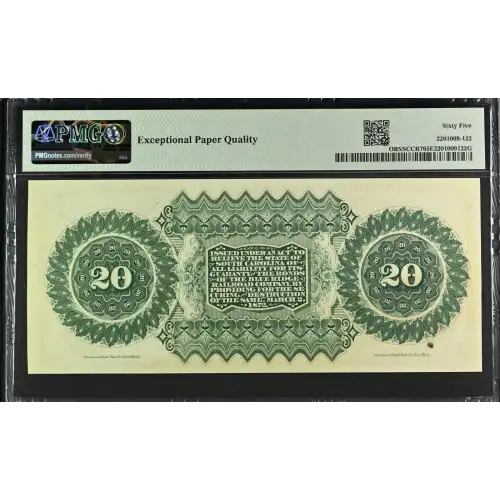
Signature Soldier, woman, & angel top Girl w/ hand over eyes right Floral design top left Green back
Category Obsolete Currency
Serial No 4670
Status Active
Seal -
Fr / Pick # Various
Additional Info -

You must be authenticated to write reviews. Click here   to login.

There are no reviews yet. Be the first to write one!

$20 1872 South Carolina, Columbia MS 65

+

Description

The $20 1872 South Carolina, Columbia MS 65 is an exceptional example of post-Civil War American currency that represents a significant chapter in United States financial history. This collectible paper money note showcases the craftsmanship and design sensibilities of the Reconstruction era, making it a prized addition to any numismatic collection. With its MS 65 Gem Uncirculated grade, this note exhibits outstanding preservation and eye appeal that collectors seek for investment-grade currency.

Overview of the 1872 $20 Note

This particular $20 note originates from Columbia, South Carolina, during a pivotal moment in American history. The note's production in 1872 places it within the immediate aftermath of the Civil War, a period of significant reconstruction and renewal for the nation. The South Carolina connection adds geographical and historical context that makes this piece particularly meaningful to regional collectors and history enthusiasts alike.

Historical Significance and Context

The 1872 $20 note emerged during the Reconstruction period following the Civil War (1861-1865). This was a time when the United States was working to reunify and stabilize its financial systems after years of conflict and disruption. The inclusion of Columbia, South Carolina, in this note's designation reflects the state's role in this transformative period of American economic recovery.

Key Historical Details:

  • Era of Production: 1872 — Seven years after the conclusion of the Civil War
  • Location: Columbia, South Carolina — The state capital and a significant commercial center
  • Denomination: $20 — A substantial sum for the period, often used for major transactions
  • Currency Type: National Bank Note — Part of the National Banking System established in 1863
  • Grade: MS 65 — Gem Uncirculated, indicating exceptional condition and minimal handling
  • Period: Reconstruction Era (1865-1877) — A transformative time for American finance and infrastructure

Understanding the $20 Denomination

In 1872, a $20 note represented significant purchasing power. To put this in perspective, the average worker earned approximately $1 to $2 per day, making a $20 note equivalent to roughly two weeks' wages. This denomination was used for substantial purchases, business transactions, and significant financial dealings. The quality and design of $20 notes reflected their importance in the economy.

Condition and Grade: MS 65 Gem Uncirculated

The MS 65 grade assigned to this note indicates Gem Uncirculated condition, representing one of the finest states a collectible note can achieve. This grading places the note among the top tier of preserved currency from its era. Notes in this condition display vibrant colors, crisp paper quality, and minimal imperfections that would be visible to the naked eye.

What MS 65 Means for This Note:

  • Minimal Handling: The note shows virtually no signs of circulation or use
  • Original Color: Inks and paper retain their original hues with exceptional brilliance
  • Sharp Details: All printed elements, including portraits, vignettes, and text, remain crisp and clear
  • Paper Quality: The paper exhibits its original texture and integrity
  • Exceptional Eye Appeal: Collectors prize MS 65 notes for their aesthetic beauty and investment potential
  • Rarity Factor: Few notes from 1872 achieve this level of preservation, making them highly sought after

Columbia, South Carolina Connection

Columbia, designated as the capital of South Carolina in 1786, played a crucial role in the state's post-Civil War recovery. As a major commercial and governmental center, Columbia was instrumental in the economic reconstruction of the South during the 1870s. Notes issued from Columbia reflect the city's importance as a financial hub during this transformative period.

The city was heavily damaged during General William Tecumseh Sherman's March to the Sea in February 1865, making currency issued there in 1872 particularly symbolic of the nation's recovery and renewed economic activity in the Reconstruction South.

National Bank Note System

The $20 note from 1872 is classified as a National Bank Note, part of a system established by the National Banking Act of 1863. This system was designed to create a more stable and unified currency throughout the United States. National Banks were chartered by the federal government and authorized to issue their own currency backed by U.S. Treasury bonds. This system represented a significant innovation in American finance and helped standardize the nation's money supply.

Features of National Bank Notes:

  • Issued by chartered National Banks throughout the country
  • Backed by U.S. Treasury bonds held by the issuing bank
  • Featured standardized designs with the bank's name and location
  • Included security features to prevent counterfeiting
  • Circulated as legal tender throughout the United States
  • Many were eventually removed from circulation and destroyed

Design and Artistry

The $20 notes from this era featured elaborate engravings and detailed vignettes created by skilled engravers. These designs served both aesthetic and security purposes, incorporating portraits of notable figures and allegorical imagery that reflected American values and ideals. The artistic quality of these notes is remarkable, with fine line work and intricate details that demonstrate the high level of craftsmanship employed in currency production during the 19th century.

Investment and Collectibility

This particular $20 1872 South Carolina, Columbia MS 65 note represents an outstanding investment opportunity for serious collectors. The combination of its historical significance, exceptional condition, and relative rarity makes it highly desirable in the numismatic market. Notes from the Reconstruction era, particularly those in Gem Uncirculated condition, continue to appreciate in value as collectors recognize their importance as artifacts of American history.

Why Collectors Seek This Note:

  • Historical Importance: Represents the Reconstruction era and American economic recovery
  • Regional Significance: Connects collectors to South Carolina's post-Civil War history
  • Superior Condition: MS 65 grade represents exceptional preservation
  • Rarity: Most notes from this period were removed from circulation and destroyed; survivors are scarce
  • Aesthetic Appeal: The note's design and color make it a beautiful display piece
  • Established Market: 19th-century currency has a well-established collector market with consistent demand
  • Portfolio Diversification: Offers an alternative to traditional investments

Years of Production and Availability

The $20 note denomination was produced from 1862 onwards as part of the National Bank Note system, but notes specifically from 1872 represent a particular snapshot of post-Civil War America. Production of these notes was completed by the National Bank that issued them, with surviving examples becoming increasingly scarce as the decades passed. The 1872 date places this note among the earlier years of National Bank Note production, adding to its historical significance.

Many notes from this era were intentionally removed from circulation as banking practices evolved and the Federal Reserve System was eventually established in 1913. This destruction of currency means that surviving examples, particularly in high grades like MS 65, are significantly rarer than their original production numbers might suggest.

Preservation and Display

Collectors of this $20 1872 South Carolina note will appreciate its exceptional state of preservation. The MS 65 grade indicates that this note has been properly cared for, likely stored in appropriate acid-free holders that have protected it from environmental damage, fading, and deterioration. When displaying or handling this note, proper conservation techniques should be maintained to ensure its continued preservation for future generations.

Conclusion

The $20 1872 South Carolina, Columbia MS 65 collectible paper money represents a remarkable convergence of American history, artistry, and numismatic value. As a genuine artifact from the Reconstruction era, issued from Columbia, South Carolina, and preserved in exceptional Gem Uncirculated condition, this note deserves a place in distinguished collections. Whether you're a seasoned numismatist, a history enthusiast, or an investor seeking alternative assets, this piece offers authenticity, beauty, and historical significance that transcends its original monetary value.

Specifications

Secure Transactions
Safeguarding Your Investments/Passion in Coins, Currency, or Bullion
We Buy Estates
We buy in-whole or in-part estates in 7 a state area.
Cash for Gold
Convert unwanted jewelry to cash or bullion
Your Cart


Continue to Checkout