Bonds

$5 1871-78 Baby Bonds PCGS MS 65 - Certified United States Collectible Paper Money

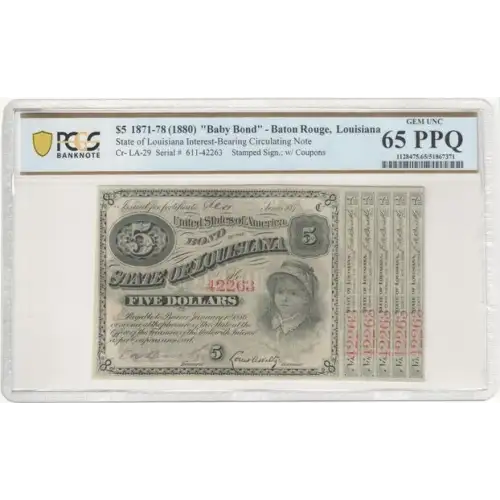
The $5 1871-78 Baby Bonds represents a fascinating piece of American financial history and a remarkable collectible for serious numismatists and paper money enthusiasts. This PCGS MS 65 graded specimen is an exceptional example of post-Civil War era currency that showcases the artistic and security innovations of the late 19th century. Whether you're an experienced collector or exploring the world of historical U.S. paper money, this Baby Bond offers genuine historical significance combined with outstanding condition and authentication.

What Are Baby Bonds?

Baby Bonds were unique financial instruments issued by the United States government during the Reconstruction era following the Civil War. These interest-bearing bonds were designed to be more accessible to everyday Americans than their larger denomination counterparts. The term "Baby Bonds" was applied to these smaller denominations because they were produced in denominations as low as $5, $10, and $20—amounts that ordinary citizens could feasibly purchase and collect. Unlike standard currency, Baby Bonds served a dual purpose: they functioned as both collectible securities and as representations of government debt.

The $5 denomination was one of the most popular Baby Bond issues, making it highly sought after by collectors today. The combination of relative scarcity, historical importance, and the exceptional artistry found on these notes makes them particularly valuable additions to any paper money collection.

Production Years: 1871-1878

The $5 1871-78 Baby Bonds were issued during a pivotal period in American history—the Reconstruction and post-Reconstruction eras. This timeframe captures a decade of significant economic rebuilding and financial innovation following the Civil War's conclusion in 1865. The government utilized these bonds as a means of raising capital while simultaneously promoting investment and financial participation among the broader American population.

  • 1871: Initial issuance of Baby Bonds begins, representing a new approach to government financing
  • 1872-1875: Peak production years with widespread distribution across the country
  • 1876-1878: Continued issuance during the Centennial period and approaching the end of the Baby Bond era
  • Post-1878: Production ceased as economic conditions and financial policies shifted

The eight-year production window makes these Baby Bonds historically significant markers of economic policy during a transformative period in American history. Notes that survived this long period in circulated condition are increasingly rare, making high-grade specimens particularly valuable to collectors.

Historical Significance and Context

The issuance of Baby Bonds during the 1871-1878 period reflects the United States government's efforts to stabilize the economy in the aftermath of the Civil War. The conflict had created substantial debt, and the government sought innovative ways to manage this financial burden while encouraging citizens to invest in government securities. Baby Bonds represented a democratic approach to government financing—allowing Americans of modest means to become creditors of the federal government.

During this era, the nation was rebuilding its infrastructure, expanding westward, and establishing itself as an emerging industrial power. The financial instruments issued during this period represent the government's confidence in America's economic future and its commitment to broadening financial participation across all social classes.

Design and Artistic Features

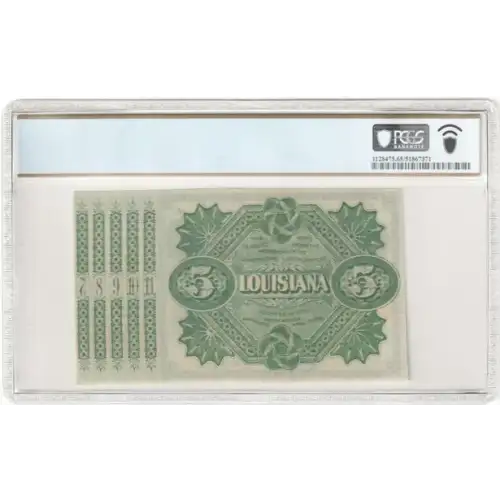
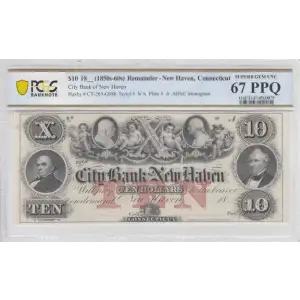
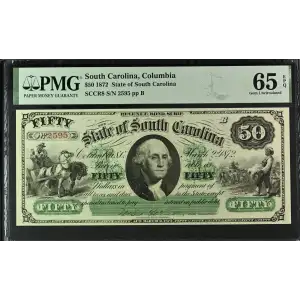
The $5 1871-78 Baby Bonds are renowned for their exceptional engraving quality and artistic design elements. These notes feature elaborate portraits, intricate border work, and decorative vignettes that represent the peak of 19th-century banknote engraving artistry. Every detail on these bonds was carefully crafted to both beautify the note and incorporate security features designed to prevent counterfeiting.

  • Intricate Engraving: Fine-line work and detailed vignettes showcase master engravers' skills
  • Portrait Elements: Historical and allegorical figures representing American ideals and progress
  • Security Features: Advanced-for-the-era design elements incorporated to prevent counterfeiting
  • Decorative Borders: Elaborate frame work and ornamental designs surrounding the denomination and text
  • Denomination Clarity: Clear, bold numerals and text ensuring easy identification and denomination verification

Collectors often praise these notes for their aesthetic appeal as much as for their historical importance. The artistic quality of Baby Bonds demonstrates the level of craftsmanship and attention to detail that went into American currency production during the 19th century.

PCGS MS 65 Certification and Grading

This $5 1871-78 Baby Bond has been professionally authenticated and graded by PCGS (Professional Coin Grading Service), one of the most respected and recognized third-party grading services in the numismatic world. The MS 65 (Mint State 65) grade indicates an exceptionally well-preserved specimen with minimal handling or signs of wear.

What MS 65 Grade Means:

  • Mint State Designation: The note shows no significant signs of circulation or handling
  • Visual Appearance: Bright, clear printing with excellent color and contrast
  • Surface Quality: Minimal bag marks, folds, or imperfections visible under normal viewing
  • Paper Condition: Strong, crisp paper stock with excellent structural integrity
  • Collector Appeal: Highly desirable grade that commands significant premiums over lower grades
  • Investment Potential: MS 65 specimens represent the sweet spot for collectors—exceptional condition without the extreme premiums of the highest grades

PCGS certification provides buyers with complete confidence in both the authenticity and condition assessment of this Baby Bond. The professional grading process involves comprehensive examination under controlled lighting, magnification, and expert analysis to ensure accurate assessment and fair market valuation.

Rarity and Availability

While $5 Baby Bonds were issued in substantial quantities during the 1871-1878 period, specimens that survive in MS 65 condition are considerably scarce. Many original Baby Bonds were spent into circulation, damaged, or lost over the past century and a half. The combination of the specific denomination, production year range, and exceptional condition grade makes this particular note a challenging find for collectors.

The survival rate of Baby Bonds decreases substantially with grade level. Notes found in circulated condition are relatively more common, but near-pristine specimens like this MS 65 example are genuine rarities that seldom appear at auction or for sale. This scarcity supports strong collector demand and stable-to-appreciating values for high-grade examples.

Collectibility and Market Appeal

The $5 1871-78 Baby Bond appeals to multiple collecting categories, including:

  • U.S. Paper Money Collectors: Specialists focused on building comprehensive American currency collections
  • Reconstruction Era Historians: Those interested in the post-Civil War period's economic and political history
  • 19th Century Artifacts: Collectors of authentic period pieces and historical documents
  • Security Print Enthusiasts: Admirers of fine engraving and security printing craftsmanship
  • Investment-Focused Collectors: Those seeking alternative investments in authenticated collectible assets

Baby Bonds have experienced renewed collector interest in recent years as more people recognize their historical importance and aesthetic beauty. These notes represent tangible connections to American history and are often considered both excellent collectibles and wise long-term investments.

Investment Considerations

Beyond their historical and aesthetic value, $5 1871-78 Baby Bonds have demonstrated solid appreciation potential over extended timeframes. Factors supporting collector and investment interest include:

  • Limited Supply: Original population of MS 65 specimens is finite and decreasing
  • Growing Demand: Expanding collector base seeking authentic 19th-century paper money
  • Historical Significance: Increasing recognition of Reconstruction-era financial instruments' importance
  • Authentication Premium: PCGS-certified specimens command consistent market premiums
  • Condition Rarity: MS 65 grade represents the quality level most desired by serious collectors
  • Diversification Appeal: Offers portfolio diversification outside traditional securities and precious metals

While past performance does not guarantee future results, Baby Bonds have shown their ability to maintain and appreciate value, particularly in exceptional grades with strong authentication.

Preservation and Care

Proper preservation ensures this valuable Baby Bond retains its condition and value for future generations. The PCGS encapsulation provides excellent protection against environmental damage, handling wear, and contamination. Owners should:

  • Store the note in a stable environment away from direct sunlight
  • Maintain consistent temperature and humidity levels
  • Avoid unnecessary handling or removal from protective encapsulation
  • Keep the certified holder in a secure location protected from physical damage
  • Handle the slab itself only by the edges to prevent fingerprints or marks

Perfect for Serious Collectors

Whether you're completing a U.S. paper money collection, researching Reconstruction-era economics, or seeking authentic 19th-century artifacts, the $5 1871-78 Baby Bond in PCGS MS 65 condition represents an exceptional acquisition. The combination of historical significance, artistic beauty, professional authentication, and investment potential makes this a piece worthy of serious collector consideration.

This authentic piece of American financial history offers both the satisfaction of owning a genuine artifact from the post-Civil War era and the security of professional certification backing its condition and authenticity. Add this remarkable Baby Bond to your collection today and own a tangible connection to one of America's most transformative historical periods.

Product ID 562155
Series Year 1871-78 (1880)
Country United States
Denomination $5
Grading Agency PCGS
Grade 65 PPQ
Signature -
Category Obsolete Currency
Serial No 611-42263
Status Active
Seal -
Fr / Pick # Various
Additional Info -

You must be authenticated to write reviews. Click here   to login.

There are no reviews yet. Be the first to write one!

$5 1871-78 Baby Bonds PCGS MS 65

+

Description

$5 1871-78 Baby Bonds PCGS MS 65 - Certified United States Collectible Paper Money

The $5 1871-78 Baby Bonds represents a fascinating piece of American financial history and a remarkable collectible for serious numismatists and paper money enthusiasts. This PCGS MS 65 graded specimen is an exceptional example of post-Civil War era currency that showcases the artistic and security innovations of the late 19th century. Whether you're an experienced collector or exploring the world of historical U.S. paper money, this Baby Bond offers genuine historical significance combined with outstanding condition and authentication.

What Are Baby Bonds?

Baby Bonds were unique financial instruments issued by the United States government during the Reconstruction era following the Civil War. These interest-bearing bonds were designed to be more accessible to everyday Americans than their larger denomination counterparts. The term "Baby Bonds" was applied to these smaller denominations because they were produced in denominations as low as $5, $10, and $20—amounts that ordinary citizens could feasibly purchase and collect. Unlike standard currency, Baby Bonds served a dual purpose: they functioned as both collectible securities and as representations of government debt.

The $5 denomination was one of the most popular Baby Bond issues, making it highly sought after by collectors today. The combination of relative scarcity, historical importance, and the exceptional artistry found on these notes makes them particularly valuable additions to any paper money collection.

Production Years: 1871-1878

The $5 1871-78 Baby Bonds were issued during a pivotal period in American history—the Reconstruction and post-Reconstruction eras. This timeframe captures a decade of significant economic rebuilding and financial innovation following the Civil War's conclusion in 1865. The government utilized these bonds as a means of raising capital while simultaneously promoting investment and financial participation among the broader American population.

  • 1871: Initial issuance of Baby Bonds begins, representing a new approach to government financing
  • 1872-1875: Peak production years with widespread distribution across the country
  • 1876-1878: Continued issuance during the Centennial period and approaching the end of the Baby Bond era
  • Post-1878: Production ceased as economic conditions and financial policies shifted

The eight-year production window makes these Baby Bonds historically significant markers of economic policy during a transformative period in American history. Notes that survived this long period in circulated condition are increasingly rare, making high-grade specimens particularly valuable to collectors.

Historical Significance and Context

The issuance of Baby Bonds during the 1871-1878 period reflects the United States government's efforts to stabilize the economy in the aftermath of the Civil War. The conflict had created substantial debt, and the government sought innovative ways to manage this financial burden while encouraging citizens to invest in government securities. Baby Bonds represented a democratic approach to government financing—allowing Americans of modest means to become creditors of the federal government.

During this era, the nation was rebuilding its infrastructure, expanding westward, and establishing itself as an emerging industrial power. The financial instruments issued during this period represent the government's confidence in America's economic future and its commitment to broadening financial participation across all social classes.

Design and Artistic Features

The $5 1871-78 Baby Bonds are renowned for their exceptional engraving quality and artistic design elements. These notes feature elaborate portraits, intricate border work, and decorative vignettes that represent the peak of 19th-century banknote engraving artistry. Every detail on these bonds was carefully crafted to both beautify the note and incorporate security features designed to prevent counterfeiting.

  • Intricate Engraving: Fine-line work and detailed vignettes showcase master engravers' skills
  • Portrait Elements: Historical and allegorical figures representing American ideals and progress
  • Security Features: Advanced-for-the-era design elements incorporated to prevent counterfeiting
  • Decorative Borders: Elaborate frame work and ornamental designs surrounding the denomination and text
  • Denomination Clarity: Clear, bold numerals and text ensuring easy identification and denomination verification

Collectors often praise these notes for their aesthetic appeal as much as for their historical importance. The artistic quality of Baby Bonds demonstrates the level of craftsmanship and attention to detail that went into American currency production during the 19th century.

PCGS MS 65 Certification and Grading

This $5 1871-78 Baby Bond has been professionally authenticated and graded by PCGS (Professional Coin Grading Service), one of the most respected and recognized third-party grading services in the numismatic world. The MS 65 (Mint State 65) grade indicates an exceptionally well-preserved specimen with minimal handling or signs of wear.

What MS 65 Grade Means:

  • Mint State Designation: The note shows no significant signs of circulation or handling
  • Visual Appearance: Bright, clear printing with excellent color and contrast
  • Surface Quality: Minimal bag marks, folds, or imperfections visible under normal viewing
  • Paper Condition: Strong, crisp paper stock with excellent structural integrity
  • Collector Appeal: Highly desirable grade that commands significant premiums over lower grades
  • Investment Potential: MS 65 specimens represent the sweet spot for collectors—exceptional condition without the extreme premiums of the highest grades

PCGS certification provides buyers with complete confidence in both the authenticity and condition assessment of this Baby Bond. The professional grading process involves comprehensive examination under controlled lighting, magnification, and expert analysis to ensure accurate assessment and fair market valuation.

Rarity and Availability

While $5 Baby Bonds were issued in substantial quantities during the 1871-1878 period, specimens that survive in MS 65 condition are considerably scarce. Many original Baby Bonds were spent into circulation, damaged, or lost over the past century and a half. The combination of the specific denomination, production year range, and exceptional condition grade makes this particular note a challenging find for collectors.

The survival rate of Baby Bonds decreases substantially with grade level. Notes found in circulated condition are relatively more common, but near-pristine specimens like this MS 65 example are genuine rarities that seldom appear at auction or for sale. This scarcity supports strong collector demand and stable-to-appreciating values for high-grade examples.

Collectibility and Market Appeal

The $5 1871-78 Baby Bond appeals to multiple collecting categories, including:

  • U.S. Paper Money Collectors: Specialists focused on building comprehensive American currency collections
  • Reconstruction Era Historians: Those interested in the post-Civil War period's economic and political history
  • 19th Century Artifacts: Collectors of authentic period pieces and historical documents
  • Security Print Enthusiasts: Admirers of fine engraving and security printing craftsmanship
  • Investment-Focused Collectors: Those seeking alternative investments in authenticated collectible assets

Baby Bonds have experienced renewed collector interest in recent years as more people recognize their historical importance and aesthetic beauty. These notes represent tangible connections to American history and are often considered both excellent collectibles and wise long-term investments.

Investment Considerations

Beyond their historical and aesthetic value, $5 1871-78 Baby Bonds have demonstrated solid appreciation potential over extended timeframes. Factors supporting collector and investment interest include:

  • Limited Supply: Original population of MS 65 specimens is finite and decreasing
  • Growing Demand: Expanding collector base seeking authentic 19th-century paper money
  • Historical Significance: Increasing recognition of Reconstruction-era financial instruments' importance
  • Authentication Premium: PCGS-certified specimens command consistent market premiums
  • Condition Rarity: MS 65 grade represents the quality level most desired by serious collectors
  • Diversification Appeal: Offers portfolio diversification outside traditional securities and precious metals

While past performance does not guarantee future results, Baby Bonds have shown their ability to maintain and appreciate value, particularly in exceptional grades with strong authentication.

Preservation and Care

Proper preservation ensures this valuable Baby Bond retains its condition and value for future generations. The PCGS encapsulation provides excellent protection against environmental damage, handling wear, and contamination. Owners should:

  • Store the note in a stable environment away from direct sunlight
  • Maintain consistent temperature and humidity levels
  • Avoid unnecessary handling or removal from protective encapsulation
  • Keep the certified holder in a secure location protected from physical damage
  • Handle the slab itself only by the edges to prevent fingerprints or marks

Perfect for Serious Collectors

Whether you're completing a U.S. paper money collection, researching Reconstruction-era economics, or seeking authentic 19th-century artifacts, the $5 1871-78 Baby Bond in PCGS MS 65 condition represents an exceptional acquisition. The combination of historical significance, artistic beauty, professional authentication, and investment potential makes this a piece worthy of serious collector consideration.

This authentic piece of American financial history offers both the satisfaction of owning a genuine artifact from the post-Civil War era and the security of professional certification backing its condition and authenticity. Add this remarkable Baby Bond to your collection today and own a tangible connection to one of America's most transformative historical periods.

Specifications

Secure Transactions
Safeguarding Your Investments/Passion in Coins, Currency, or Bullion
We Buy Estates
We buy in-whole or in-part estates in 7 a state area.
Cash for Gold
Convert unwanted jewelry to cash or bullion
Your Cart


Continue to Checkout