- Gold Au $4020.60 $-8.83
- Silver Ag $57.96 $-0.10
- Q Platinum1 Pt $1617.10 $-2.70
- Q Palladium1 Pd $1223.00 $0.00
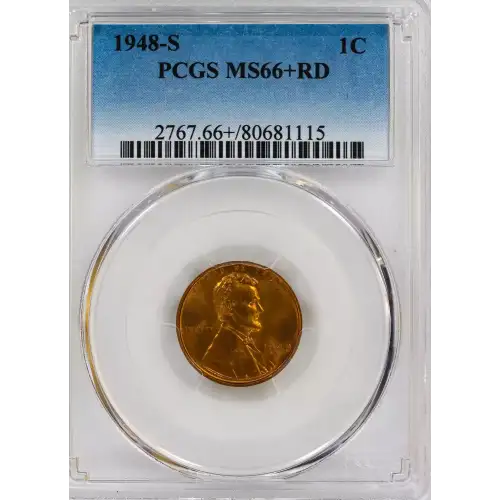
1948-S Small Cents Lincoln, Wheat Ears Reverse PCGS MS-66+ RD
Category: Small Cents Lincoln, Wheat Ears ReverseDescription
The 1948 S Small Cents Lincoln Wheat Ears Reverse represents a significant piece of American numismatic history. This particular specimen, graded PCGS MS-66+ RD (Red), exemplifies the quality and appeal of mid-20th century coinage. Whether you're a seasoned collector or a newcomer to numismatics, this coin offers both historical significance and impressive eye appeal that makes it a worthwhile addition to any collection.
About the 1948 S Lincoln Wheat Cent
The Lincoln Wheat Ears Reverse cent, produced from 1909 to 1958, remains one of the most popular and widely collected coin series in American numismatic history. The 1948 S Small Cents issue represents the post-World War II era of coin production, a time when American mints were returning to normal peacetime operations following years of wartime demand. The San Francisco mint, denoted by the "S" mintmark, produced these coins during a period of significant economic recovery and growth in the United States.
By 1948, the Lincoln cent design had already been in circulation for nearly four decades, having been introduced in 1909 to commemorate the centennial of President Abraham Lincoln's birth. The wheat ear design on the reverse, created by engraver Victor David Brenner, had become an iconic symbol of American coinage and remained beloved by collectors and the general public alike.
Historical Context and Significance
The year 1948 was particularly significant in American history. The nation had emerged victorious from World War II just three years earlier, and the economy was booming with post-war prosperity. Consumer spending was at historic highs, and optimism about the future pervaded American culture. During this period, coin production at the San Francisco mint was substantial, reflecting the increased demand for circulating currency.
The San Francisco mint's output during the late 1940s was crucial in meeting the nation's monetary needs. The 1948 S cent production was part of a larger effort to ensure adequate coinage circulation throughout the American economy. This makes surviving specimens in exceptional grades particularly noteworthy, as most coins from this era saw heavy circulation use.
Grading and Condition Details
This remarkable specimen has been professionally graded by PCGS (Professional Coin Grading Service), one of the most respected third-party grading companies in the numismatic industry. The MS-66+ RD designation indicates the coin's exceptional quality and desirability.
- Grade: PCGS MS-66+ Red (RD)
- Year: 1948
- Mint: San Francisco (S mintmark)
- Denomination: One Cent
- Design: Lincoln Wheat Ears Reverse
- Composition: 95% Copper, 5% Zinc (Wartime Composition ended in 1946)
- Diameter: 19 mm
- Weight: 3.11 grams
- Strike: Small Cents (post-1947 standard size)
Understanding the MS-66+ RD Grade
A PCGS MS-66+ grade represents a coin that is exceptionally well-preserved, with only minimal signs of handling or wear. The RD designation specifically indicates that the coin retains its original red copper coloration, which is highly desirable in Lincoln cent collecting. The "+" modifier denotes a coin at the top end of the MS-66 grade range, approaching MS-67 quality.
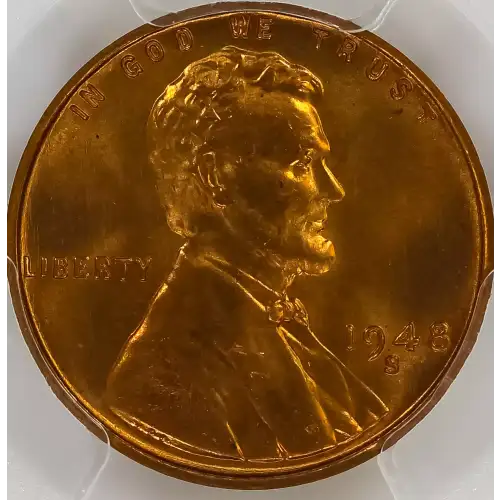
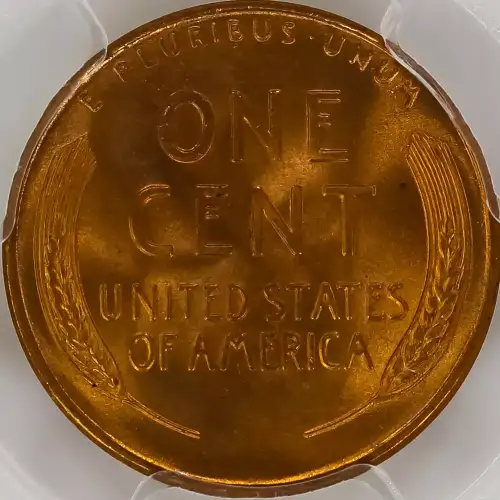
At this quality level, the coin exhibits sharply struck details, particularly on Lincoln's profile and the wheat ear reverse design. Original mint luster remains abundant across the surfaces, giving the coin that distinctive bright, reflective quality that collectors prize. The eye appeal of an MS-66+ RD cent like this one is exceptional, with attractive toning and virtually no distracting marks or imperfections visible to the unaided eye.
The Lincoln Cent Design
The obverse (front) of this cent features the iconic profile of President Abraham Lincoln, designed by Victor David Brenner. Lincoln's portrait faces left and is surrounded by the inscriptions "LIBERTY" and "IN GOD WE TRUST." The date "1948" appears below Lincoln's neck, with the San Francisco mintmark "S" located just below the date on cents from the San Francisco facility.
The reverse (back) displays the famous wheat ear design that gives this series its popular name among collectors. Two stylized bundles of wheat flank the denomination and inscriptions. The words "ONE CENT" appear prominently in the center, with "UNITED STATES OF AMERICA" arcing across the top and "E PLURIBUS UNUM" positioned above the wheat ears. This elegant design remained virtually unchanged throughout the entire 50-year production run of the Wheat Ears Reverse cent.
Collector Appeal and Demand
Lincoln Wheat cents remain among the most actively collected coins in the United States. The series' long production run, iconic design, and accessibility make it appealing to collectors of all experience levels. High-grade examples like this 1948 S small cents in MS-66+ RD are particularly sought after by serious collectors who appreciate both the historical significance and the aesthetic qualities of exceptional specimens.
The 1948 S date is a popular and readily available date within the series, though high-grade examples in original red condition become increasingly scarce. The S mintmark variety, when found in this condition, represents a notable achievement in preservation and is highly desirable among Lincoln cent specialists.
Investment Potential and Value
Numismatic coins like this 1948 S small cents Lincoln cent have demonstrated strong collector demand and appreciation potential over the long term. While not precious metals investments in the traditional sense, high-grade certified coins represent concentrated numismatic value. The combination of key-date status, mintmark, exceptional grade, and original red color creates multiple layers of collector appeal that support lasting demand.
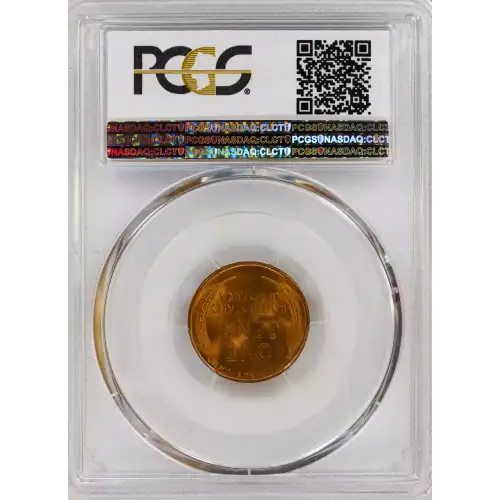
Professional third-party grading and certification adds transparency and confidence to your purchase. The PCGS holder protects the coin while providing clear documentation of its grade and condition for future reference, insurance, or potential resale.
Why Choose This Coin
Whether you're building a comprehensive Lincoln cent collection, focusing on San Francisco mint issues, or seeking exceptional examples of early post-war coinage, the 1948 S small cents Lincoln Wheat Ears Reverse in PCGS MS-66+ RD represents an outstanding acquisition. The combination of historical significance, exceptional condition, original color, and professional certification makes this a coin worthy of serious consideration by discerning collectors.
This specimen offers the perfect opportunity to own a piece of mid-20th century American numismatic history in outstanding condition. The 1948 S Lincoln cent bridges the gap between wartime production pressures and the return to peacetime normalcy, making it a historically significant marker in American coinage production.
Specifications