- Gold Au $4380.32 $0.00
- Silver Ag $66.40 $-0.01
- Platinum Pt $1817.16 $0.00
- Palladium Pd $1335.44 $0.00
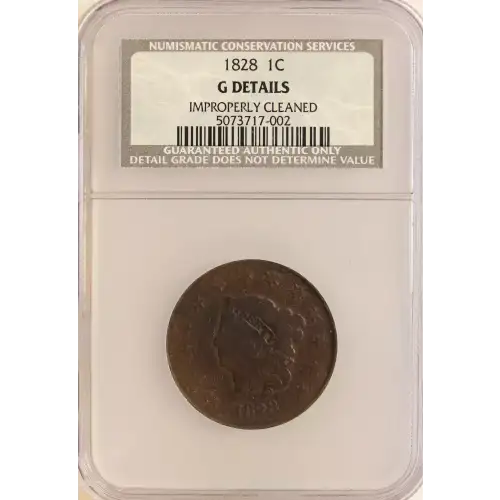
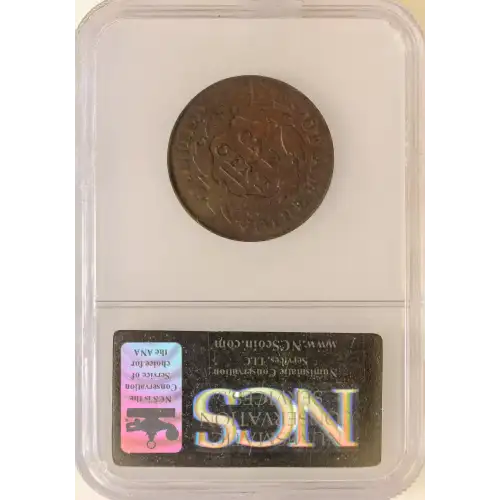
1828 Large Cents Coronet Head Other G-4 Details/Improperly cleaned
Category: Large Cents Coronet HeadDescription
1828 Large Cent Coronet Head - G-4 Details/Improperly Cleaned
This 1828 Large Cent Coronet Head represents a significant piece of early American numismatic history. Graded as G-4 Details with improperly cleaned designation, this coin offers collectors an authentic example of the iconic Coronet Head design that helped define the United States Mint's coinage during the early 19th century. Despite its circulated condition and cleaning marks, this Large Cent remains a desirable addition to any serious numismatic collection.
Coin Specifications
- Date: 1828
- Denomination: Large Cent (1¢)
- Design Type: Coronet Head
- Grading Service: Professional Numismatic Grading
- Grade: G-4 (Good)
- Grade Designation: Details/Improperly Cleaned
- Metal Composition: 100% Copper
- Diameter: 28.5mm
- Weight: Approximately 10.89 grams
- Mint Mark: No mint mark (Philadelphia Mint)
- Obverse Design: Liberty Head wearing a coronet
- Reverse Design: Wreath with denomination and date
Historical Overview of the 1828 Large Cent
The year 1828 marked an important period in the evolution of United States coinage. The Large Cent, which was minted from 1793 to 1857, served as the primary one-cent piece during the early decades of the American republic. The 1828 example represents a coin produced during the second decade of the Coronet Head design era, which began in 1816 and continued through 1839.
During 1828, the United States Mint at Philadelphia produced a significant number of Large Cents to meet the demands of commerce. These coins circulated extensively throughout American commerce, from bustling city markets to rural trading posts. The 1828 date is not particularly rare in the larger context of Large Cent production, but finding well-preserved examples continues to be challenging due to the heavy circulation these coins experienced.
The Coronet Head Design
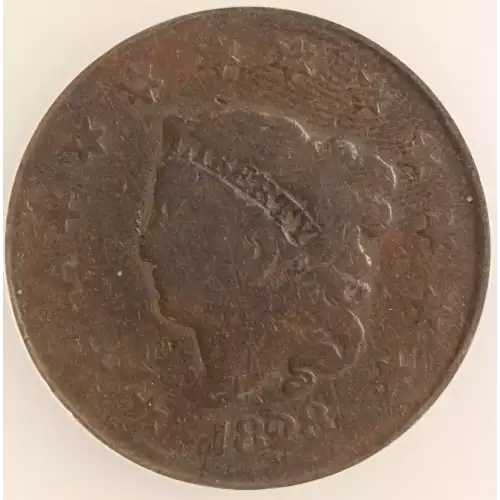
The Coronet Head design, created by engraver John Reich, represents a refined artistic statement compared to earlier Large Cent designs. The obverse features Lady Liberty in profile, wearing a simple coronet inscribed with the word "LIBERTY." Her hair flows gracefully, and the design emphasizes classical beauty and democratic ideals. The date appears below Liberty's neck, clearly visible as "1828" on this example.
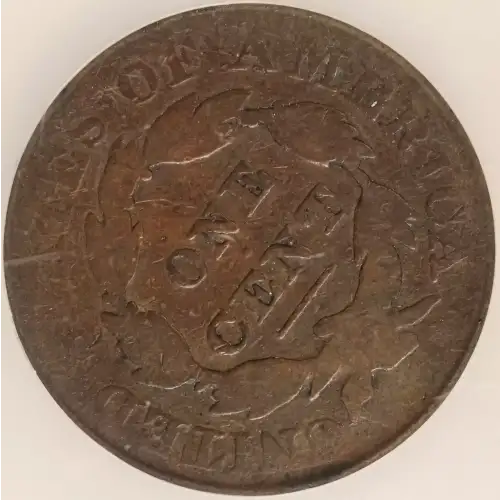
The reverse of the 1828 Large Cent features a wreath encircling the denomination and inscription. The words "ONE CENT" are prominently displayed in the center, surrounded by an olive and oak wreath design. This wreath motif became iconic in American coinage and represented the union of peace and strength. The phrase "UNITED STATES OF AMERICA" circles the outer edge of the reverse design.
Condition and Grading Details
This particular 1828 Large Cent is graded as G-4 (Good), indicating a coin that shows significant wear from circulation but remains identifiable and collectible. At the G-4 grade level, the main design elements are clearly visible, though details have worn considerably. The high points of Liberty's face, hair, and the coronet show substantial wear, while the date and denomination remain legible.
The "Details/Improperly Cleaned" designation is significant and should be understood by prospective buyers. This notation indicates that the coin has been cleaned at some point in its post-production history, a practice that is generally discouraged in the numismatic community. The cleaning has removed the natural patina that develops on copper coins over time and may have caused damage to the surface through improper techniques.
Despite the cleaning, this coin retains considerable character and serves as an authentic historical artifact. Collectors appreciate the "Details" designation because it acknowledges that the coin's grade is based on its visible characteristics rather than its original mint state. This transparency in grading allows collectors to make informed purchasing decisions.
Historical Context of 1828
The year 1828 was significant in American history for reasons extending beyond numismatics. This was the year of another contentious presidential election between incumbent John Quincy Adams and challenger Andrew Jackson. The American economy was developing rapidly, with increasing industrialization in the Northeast and continued agricultural expansion in the South and West. Large Cents like this 1828 example facilitated daily commerce in this dynamic economic environment.
The copper Large Cent was essential to everyday transactions. Most Americans earned their living through labor, and prices for common goods were measured in cents and fractions of cents. A single copper Large Cent represented real purchasing power—enough to buy a roll, a newspaper, or contribute toward larger purchases. This coin, therefore, represents not just numismatic history but also the economic realities of early 19th-century America.
Collecting Large Cents
Large Cents have developed a devoted following among numismatic collectors for several compelling reasons. First, these coins represent the earliest sustained coinage program of the United States Mint, making them historically significant. Second, the designs are artistically appealing and show the evolution of American aesthetic tastes throughout the 19th century. Third, collectors can assemble relatively complete collections of Large Cents without prohibitive expense in lower grades.
The 1828 date is a common year of issue in the Large Cent series, meaning that examples exist in sufficient quantity to be accessible to most collectors. However, finding specimens in higher grades remains challenging, making G-4 examples like this one particularly valuable to those building collections by date and variety.
Why Choose This 1828 Large Cent
This 1828 Large Cent Coronet Head offers collectors several advantages. As an early United States coin, it serves as a tangible connection to American history spanning nearly two centuries. The Coronet Head design is among the most aesthetically pleasing of all Large Cent designs, featuring refined engraving work that reflected the artistic standards of the early 19th-century mint.
For budget-conscious collectors, G-4 examples provide excellent value while maintaining strong collectibility. The "Details/Improperly Cleaned" designation ensures that the grading is transparent and that buyers understand the coin's history. Many collectors specifically seek examples with known cleaning because they can appreciate the coins' authenticity while accepting their altered patina.
Whether you're a seasoned numismatist building a comprehensive United States coinage collection, a history enthusiast seeking tangible artifacts from America's past, or a new collector beginning their numismatic journey, this 1828 Large Cent represents an excellent acquisition opportunity.
Investment and Collecting Potential
Large Cents have established themselves as reliable components of numismatic collections and portfolios. The values of early United States coins have historically trended upward over extended periods, reflecting both their historical significance and limited supply of high-grade examples. While this G-4 example is not a rare date, the combination of age, historical importance, and artistic merit continues to sustain collector interest and market demand.
Common dates in circulated grades, such as this 1828, serve as accessible entry points for newer collectors while remaining valuable to experienced numismatists who appreciate the complete historical picture these coins provide.
Care and Preservation
Collectors who acquire this 1828 Large Cent should handle it with appropriate care. While this coin has already experienced significant circulation and cleaning, further handling should be minimized. Storage in a cool, dry environment using acid-free holders specifically designed for numismatic materials will help preserve the coin for future generations. Proper storage prevents additional oxidation and environmental damage to the copper surface.
Conclusion
The 1828 Large Cent Coronet Head represents classic American numismatic tradition. With its historical significance, artistic design, and accessible price point, this G-4 Details/Improperly Cleaned example deserves consideration by collectors seeking authentic early United States coins. Add this piece of American history to your collection today.
Specifications
Related products