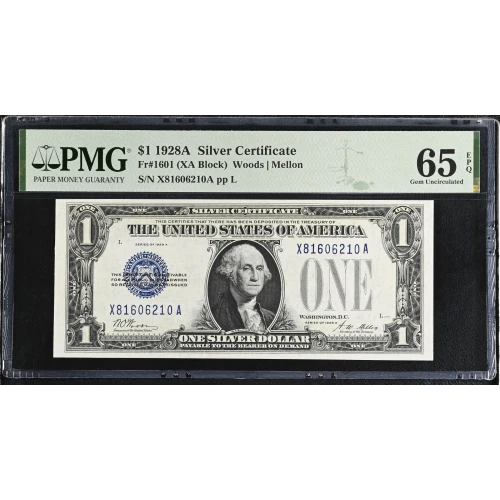
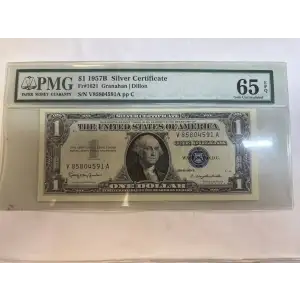
$1 1928-A blue seal. Small Silver Certificates 1601

The $1 1928 A Silver Certificate MS 65 represents a pivotal piece of American numismatic history, capturing a significant era in United States currency design and production. This exceptional specimen showcases the artistry and craftsmanship of early 20th-century currency printing, making it a highly sought-after collectible for serious numismatists and currency enthusiasts alike.

Overview of the 1928 A $1 Silver Certificate

The $1 1928 A Silver Certificate is one of the most recognizable and beloved pieces of American paper currency ever produced. With its distinctive design, vibrant colors, and historical significance, this note has captivated collectors for decades. The MS 65 grading indicates this specimen is in exceptional condition, displaying minimal signs of wear and handling while retaining remarkable eye appeal and technical quality.

Historical Context and Significance

Silver Certificates hold a unique place in American monetary history. These notes were backed by actual silver held in United States Treasury vaults, representing a direct claim on physical silver reserves. This backing gave these certificates intrinsic value beyond their face denomination, making them fundamentally different from modern currency.

The 1928 series represents a particularly important milestone in American currency design. This was a period of economic transformation in the United States, occurring between the post-World War I economic adjustments and the onset of the Great Depression. Currency from this era carries significant historical weight and collector appeal.

Production Years and Design Evolution

  • First Issued: 1928 - marking the beginning of the 1928 series
  • Series Designation: The "A" designation indicates this particular variety was printed after initial production, representing a specific subset of 1928 Silver Certificates
  • Production Timeframe: The 1928 A variety continued production through the late 1920s and into the early 1930s
  • Printing Method: Produced using traditional intaglio printing techniques by the Bureau of Engraving and Printing
  • Serial Numbers: Each note carries unique serial numbers, documenting its individual production record

Design Features and Artistic Elements

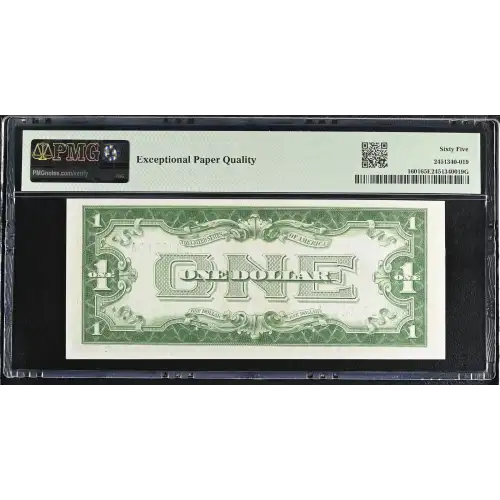
The $1 Silver Certificate features one of the most iconic designs in American currency history. The obverse (front) of the note displays a portrait of George Washington, rendered with remarkable detail and precision. The reverse (back) showcases an eagle design that has become synonymous with American currency and national pride.

The 1928 series introduced subtle design refinements compared to earlier Silver Certificates. These improvements enhanced security features while maintaining the classical aesthetic that made Silver Certificates immediately recognizable. The intricate border work, detailed vignettes, and carefully balanced typography create a visually stunning piece of currency that remains impressive even after nearly a century.

Condition and Grading: MS 65 Explained

The MS 65 grade (Gem Mint State 65) represents an exceptional level of preservation. According to the Sheldon scale used by professional grading companies, an MS 65 note exhibits:

  • Exceptional preservation with minimal wear or handling marks
  • Bright, vibrant colors that have been well-maintained
  • Sharp, well-defined printing details throughout the note
  • Excellent paper quality with minimal foxing or discoloration
  • Superior eye appeal that immediately captures collector attention
  • Perhaps minor imperfections visible only upon close inspection

Notes graded MS 65 are considered "Gem" quality, representing the finest examples most collectors will ever encounter. This grading reflects not just technical specifications but the overall aesthetic quality and appeal of the specimen.

Silver Certificate Historical Background

Silver Certificates were first introduced in the United States in 1878 as a mechanism to monetize silver reserves and stabilize the silver market. These certificates served as physical representations of actual silver stored in federal vaults, creating a direct connection between the paper currency and tangible precious metal assets.

The concept of Silver Certificates responded to political and economic pressures of the late 19th century, particularly concerns from silver-mining states and agricultural interests. They represented a compromise between those advocating for expanded currency based on silver reserves and those preferring gold-backed currency.

  • 1878-1923: First and second series of Silver Certificates introduced and circulated
  • 1928: Introduction of the 1928 series with updated designs and security features
  • 1950s: Removal of "Silver Certificate" language from new issues due to gold and silver reserve changes
  • 1968: End of silver redemption for existing certificates
  • Present Day: Collectible status with significant numismatic value

Collector Appeal and Investment Potential

The $1 1928 A Silver Certificate in MS 65 condition represents an excellent addition to any serious currency collection. These notes appeal to collectors for multiple reasons: historical significance, artistic merit, rarity of high-grade specimens, and the connection to America's silver standard era.

Collectors particularly value the 1928 A variety because it represents a specific printing period with distinct characteristics. The 1928 series as a whole has become increasingly difficult to find in high grades, making MS 65 specimens particularly desirable. As vintage currency becomes scarcer and collector demand remains strong, quality examples continue to appreciate in value.

Authenticity and Professional Grading

When acquiring a $1 1928 A Silver Certificate graded MS 65, you receive the benefit of professional authentication and grading. Reputable third-party grading services employ expert numismatists who examine every aspect of the note under magnification and controlled lighting conditions.

Professional grading provides:

  • Verification of authenticity to guard against counterfeits
  • Objective assessment of condition using standardized scales
  • Protective encapsulation that preserves the note's condition
  • Documentation of the specific variety and production details
  • Increased liquidity should you decide to sell or trade
  • Confidence in the note's value and desirability

Preservation and Display Considerations

Maintaining the exceptional condition of an MS 65 Silver Certificate requires proper handling and storage. Professional grading companies encase notes in protective holders that shield them from environmental damage, fingerprints, and deterioration. These holders allow for full viewing of the note while providing maximum protection.

When handling vintage currency, using cotton gloves and avoiding contact with the note's surface helps preserve its quality. Storing the note in a cool, dry environment away from direct sunlight prevents fading and discoloration. Many collectors maintain their specimens in safe deposit boxes or home safes for security and environmental protection.

Educational Value

Beyond their monetary value, Silver Certificates serve as educational tools for understanding American history, monetary policy, and currency design. The 1928 A $1 Silver Certificate tells stories about America's economic philosophy, technological capabilities in printing and security features, and the evolution of currency standards.

Collectors often use these notes to educate others about the gold and silver standards, the transition from commodity-backed currency to fiat money, and the role of government institutions in maintaining monetary stability. The visual design itself demonstrates the importance placed on security and artistry in currency production during the early 20th century.

Numismatic Market Trends

The market for high-grade Silver Certificates has shown consistent strength over recent decades. Several factors contribute to sustained collector interest:

  • Growing appreciation for vintage Americana and historical artifacts
  • Increased recognition of currency as legitimate collectible investments
  • Limited supply of notes in high grades due to age and circulation
  • Broadening collector base including international buyers
  • Educational value driving institutional and library interest
  • Media attention to currency collecting and numismatic discoveries

Why Choose a 1928 A Specimen?

The 1928 A variety occupies a special niche within the Silver Certificate collecting community. It represents notes produced after the initial release, making them slightly scarcer than early 1928 printings. The combination of historical significance, design appeal, and relative scarcity makes this variety particularly attractive to discerning collectors.

An MS 65 specimen represents the finest quality most collectors will encounter, making it a worthy centerpiece for any collection. The grade provides confidence in condition assessment while the historical context enriches appreciation for the note's significance.

Final Considerations

The $1 1928 A Silver Certificate MS 65 represents far more than currency—it embodies a specific moment in American history when silver backed the nation's money supply, when currency design prioritized artistry alongside security, and when the federal government controlled vast quantities of precious metal reserves.

Whether acquired for its historical significance, artistic merit, investment potential, or collector enjoyment, the 1928 A $1 Silver Certificate in MS 65 condition stands as a testament to American craftsmanship and economic history. This exceptional specimen will provide educational value and aesthetic appreciation for generations to come.

Product ID 562188
Series Year 1928A
Country United States
Denomination $1
Grading Agency PMG
Grade 65 EPQ
Signature Woods Mellon
Category Small Silver Certificates
Serial No X81606210A
Status Active
Seal Blue
Fr / Pick # 1601
Additional Info No Printed: 2,267,809,50

You must be authenticated to write reviews. Click here   to login.

There are no reviews yet. Be the first to write one!

$1 1928 A Silver Certificate MS 65

+

Description

The $1 1928 A Silver Certificate MS 65 represents a pivotal piece of American numismatic history, capturing a significant era in United States currency design and production. This exceptional specimen showcases the artistry and craftsmanship of early 20th-century currency printing, making it a highly sought-after collectible for serious numismatists and currency enthusiasts alike.

Overview of the 1928 A $1 Silver Certificate

The $1 1928 A Silver Certificate is one of the most recognizable and beloved pieces of American paper currency ever produced. With its distinctive design, vibrant colors, and historical significance, this note has captivated collectors for decades. The MS 65 grading indicates this specimen is in exceptional condition, displaying minimal signs of wear and handling while retaining remarkable eye appeal and technical quality.

Historical Context and Significance

Silver Certificates hold a unique place in American monetary history. These notes were backed by actual silver held in United States Treasury vaults, representing a direct claim on physical silver reserves. This backing gave these certificates intrinsic value beyond their face denomination, making them fundamentally different from modern currency.

The 1928 series represents a particularly important milestone in American currency design. This was a period of economic transformation in the United States, occurring between the post-World War I economic adjustments and the onset of the Great Depression. Currency from this era carries significant historical weight and collector appeal.

Production Years and Design Evolution

  • First Issued: 1928 - marking the beginning of the 1928 series
  • Series Designation: The "A" designation indicates this particular variety was printed after initial production, representing a specific subset of 1928 Silver Certificates
  • Production Timeframe: The 1928 A variety continued production through the late 1920s and into the early 1930s
  • Printing Method: Produced using traditional intaglio printing techniques by the Bureau of Engraving and Printing
  • Serial Numbers: Each note carries unique serial numbers, documenting its individual production record

Design Features and Artistic Elements

The $1 Silver Certificate features one of the most iconic designs in American currency history. The obverse (front) of the note displays a portrait of George Washington, rendered with remarkable detail and precision. The reverse (back) showcases an eagle design that has become synonymous with American currency and national pride.

The 1928 series introduced subtle design refinements compared to earlier Silver Certificates. These improvements enhanced security features while maintaining the classical aesthetic that made Silver Certificates immediately recognizable. The intricate border work, detailed vignettes, and carefully balanced typography create a visually stunning piece of currency that remains impressive even after nearly a century.

Condition and Grading: MS 65 Explained

The MS 65 grade (Gem Mint State 65) represents an exceptional level of preservation. According to the Sheldon scale used by professional grading companies, an MS 65 note exhibits:

  • Exceptional preservation with minimal wear or handling marks
  • Bright, vibrant colors that have been well-maintained
  • Sharp, well-defined printing details throughout the note
  • Excellent paper quality with minimal foxing or discoloration
  • Superior eye appeal that immediately captures collector attention
  • Perhaps minor imperfections visible only upon close inspection

Notes graded MS 65 are considered "Gem" quality, representing the finest examples most collectors will ever encounter. This grading reflects not just technical specifications but the overall aesthetic quality and appeal of the specimen.

Silver Certificate Historical Background

Silver Certificates were first introduced in the United States in 1878 as a mechanism to monetize silver reserves and stabilize the silver market. These certificates served as physical representations of actual silver stored in federal vaults, creating a direct connection between the paper currency and tangible precious metal assets.

The concept of Silver Certificates responded to political and economic pressures of the late 19th century, particularly concerns from silver-mining states and agricultural interests. They represented a compromise between those advocating for expanded currency based on silver reserves and those preferring gold-backed currency.

  • 1878-1923: First and second series of Silver Certificates introduced and circulated
  • 1928: Introduction of the 1928 series with updated designs and security features
  • 1950s: Removal of "Silver Certificate" language from new issues due to gold and silver reserve changes
  • 1968: End of silver redemption for existing certificates
  • Present Day: Collectible status with significant numismatic value

Collector Appeal and Investment Potential

The $1 1928 A Silver Certificate in MS 65 condition represents an excellent addition to any serious currency collection. These notes appeal to collectors for multiple reasons: historical significance, artistic merit, rarity of high-grade specimens, and the connection to America's silver standard era.

Collectors particularly value the 1928 A variety because it represents a specific printing period with distinct characteristics. The 1928 series as a whole has become increasingly difficult to find in high grades, making MS 65 specimens particularly desirable. As vintage currency becomes scarcer and collector demand remains strong, quality examples continue to appreciate in value.

Authenticity and Professional Grading

When acquiring a $1 1928 A Silver Certificate graded MS 65, you receive the benefit of professional authentication and grading. Reputable third-party grading services employ expert numismatists who examine every aspect of the note under magnification and controlled lighting conditions.

Professional grading provides:

  • Verification of authenticity to guard against counterfeits
  • Objective assessment of condition using standardized scales
  • Protective encapsulation that preserves the note's condition
  • Documentation of the specific variety and production details
  • Increased liquidity should you decide to sell or trade
  • Confidence in the note's value and desirability

Preservation and Display Considerations

Maintaining the exceptional condition of an MS 65 Silver Certificate requires proper handling and storage. Professional grading companies encase notes in protective holders that shield them from environmental damage, fingerprints, and deterioration. These holders allow for full viewing of the note while providing maximum protection.

When handling vintage currency, using cotton gloves and avoiding contact with the note's surface helps preserve its quality. Storing the note in a cool, dry environment away from direct sunlight prevents fading and discoloration. Many collectors maintain their specimens in safe deposit boxes or home safes for security and environmental protection.

Educational Value

Beyond their monetary value, Silver Certificates serve as educational tools for understanding American history, monetary policy, and currency design. The 1928 A $1 Silver Certificate tells stories about America's economic philosophy, technological capabilities in printing and security features, and the evolution of currency standards.

Collectors often use these notes to educate others about the gold and silver standards, the transition from commodity-backed currency to fiat money, and the role of government institutions in maintaining monetary stability. The visual design itself demonstrates the importance placed on security and artistry in currency production during the early 20th century.

Numismatic Market Trends

The market for high-grade Silver Certificates has shown consistent strength over recent decades. Several factors contribute to sustained collector interest:

  • Growing appreciation for vintage Americana and historical artifacts
  • Increased recognition of currency as legitimate collectible investments
  • Limited supply of notes in high grades due to age and circulation
  • Broadening collector base including international buyers
  • Educational value driving institutional and library interest
  • Media attention to currency collecting and numismatic discoveries

Why Choose a 1928 A Specimen?

The 1928 A variety occupies a special niche within the Silver Certificate collecting community. It represents notes produced after the initial release, making them slightly scarcer than early 1928 printings. The combination of historical significance, design appeal, and relative scarcity makes this variety particularly attractive to discerning collectors.

An MS 65 specimen represents the finest quality most collectors will encounter, making it a worthy centerpiece for any collection. The grade provides confidence in condition assessment while the historical context enriches appreciation for the note's significance.

Final Considerations

The $1 1928 A Silver Certificate MS 65 represents far more than currency—it embodies a specific moment in American history when silver backed the nation's money supply, when currency design prioritized artistry alongside security, and when the federal government controlled vast quantities of precious metal reserves.

Whether acquired for its historical significance, artistic merit, investment potential, or collector enjoyment, the 1928 A $1 Silver Certificate in MS 65 condition stands as a testament to American craftsmanship and economic history. This exceptional specimen will provide educational value and aesthetic appreciation for generations to come.

Specifications

Secure Transactions
Safeguarding Your Investments/Passion in Coins, Currency, or Bullion
We Buy Estates
We buy in-whole or in-part estates in 7 a state area.
Cash for Gold
Convert unwanted jewelry to cash or bullion
Your Cart


Continue to Checkout