- Gold Au $4458.60 $0.00
- Silver Ag $66.71 $0.00
- Platinum Pt $1845.50 $0.00
- Palladium Pd $1461.00 $0.00
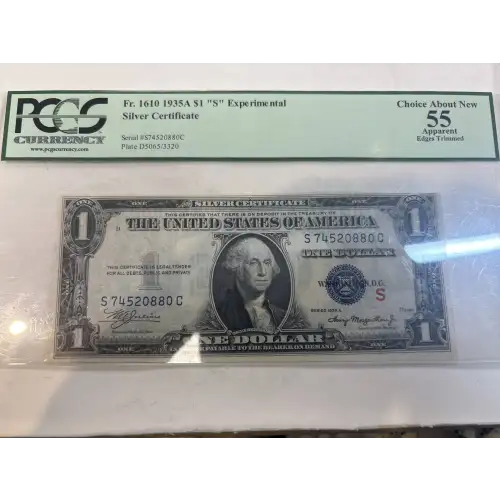
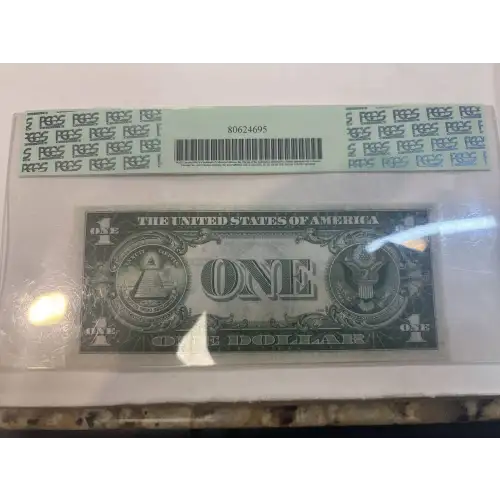
$1 1935-A blue seal. Small Silver Certificates 1610 PCGS 55
Description
1935-A $1 Blue Seal Small Silver Certificate - PCGS 55
Discover this exceptional 1935-A $1 Blue Seal Small Silver Certificate, graded PCGS 55, a remarkable piece of American numismatic history. This collectible paper money represents a pivotal era in United States currency production and showcases the transitional design changes that defined 1930s American currency. Whether you're an experienced collector or a newcomer to rare paper money investing, this authentic Silver Certificate offers both historical significance and impressive aesthetic appeal.
Overview of the 1935-A $1 Blue Seal Silver Certificate
The 1935-A series $1 Silver Certificate with blue seal is one of the most recognizable and sought-after denominations in American paper currency collecting. This particular note represents a critical period when the United States Treasury transitioned from large-size to small-size currency formats. The PCGS 55 grade indicates a circulated note with considerable eye appeal and excellent color preservation, making it an ideal acquisition for both serious collectors and investors seeking authentic historical artifacts.
The blue seal on this certificate is particularly significant, as it distinguishes Silver Certificates from other currency types issued during this period. The vibrant blue coloring has been exceptionally well-preserved on this example, demonstrating the quality of the paper stock used during this era of American currency production.
Historical Background of Silver Certificates
Silver Certificates represent a unique chapter in American monetary history. Unlike regular Federal Reserve Notes, Silver Certificates were backed by actual silver held in U.S. Treasury vaults. The phrase "Silver Certificate" appears prominently on the face of each note, along with the promise that the certificate could be redeemed for its face value in silver bullion. This direct connection to precious metal reserves made Silver Certificates especially valuable and trustworthy during their circulation period.
The silver backing provided by these certificates created tremendous confidence in American currency throughout the domestic economy and internationally. Collectors today appreciate Silver Certificates not only for their numismatic value but also for the historical significance they represent as tangible evidence of America's monetary system and precious metal reserves during the twentieth century.
The 1935-A Series: Transition to Small-Size Currency
The 1935-A series marks a crucial transition point in American currency design and production. In 1929, the U.S. Treasury made the revolutionary decision to reduce the physical size of currency notes, decreasing dimensions from 7.375" x 3.125" (large-size) to the modern 6.14" x 2.61" (small-size) that we use today. This dramatic redesign was implemented to reduce printing costs, improve handling efficiency, and modernize American currency to compete with international standards.
The 1935 series was the first year of small-size Silver Certificate production, making it historically significant for currency researchers and collectors. The 1935-A designation indicates a minor variation in the series, which occurred throughout the 1930s as security features and design elements were gradually refined. These variations make each sub-series worthy of study and collection.
Production Timeline and Years of Issue
- Initial Release: 1935 - The 1935 series was first introduced as part of the comprehensive small-size currency initiative
- 1935-A Series Production: 1935-1957 - The 1935-A variation remained in production for over two decades, with substantial quantities printed across multiple Federal Reserve Banks
- Peak Production Years: Late 1930s through 1940s - The highest concentrations of 1935-A notes were produced during this period
- Extended Circulation: 1957 - Production continued through 1957, representing one of the longest-running series of this denomination
The extended production run of the 1935-A series resulted in millions of notes being printed across the twelve Federal Reserve Banks. However, the passage of time, natural attrition, and circulation wear have significantly reduced the number of notes surviving in high grades today. This survival scarcity makes well-preserved examples increasingly valuable to collectors.
Design Features and Visual Characteristics
The obverse (front) of this 1935-A $1 Silver Certificate features a portrait of George Washington, the first President of the United States. Washington's dignified profile has appeared on the $1 bill since 1869, making it one of the most enduring designs in American currency. The engraving quality on 1935-A notes demonstrates exceptional artistry and precision, with fine details visible throughout the portrait.
The blue seal positioned to the right of Washington's portrait is the defining characteristic of Silver Certificates from this period. The seal contains a circular design with an eagle, stars, and the text "THE UNITED STATES OF AMERICA" arranged around the periphery. The blue coloring was specifically chosen to distinguish Silver Certificates from Federal Reserve Notes, which featured green seals.
The reverse (back) of the 1935-A $1 note displays a dual portrait of the Great Seal of the United States with both eagle and shield designs, along with the denomination clearly marked. The intricate linework and detailed engraving work on the reverse reflects the high standards of currency design maintained by the Bureau of Engraving and Printing during this era.
Serial numbers appear in black ink on both sides of the note, with the prefix indicating the Federal Reserve Bank of issue. The phrase "SILVER CERTIFICATE" appears prominently above the portrait of Washington, along with "ONE DOLLAR" denominations positioned strategically throughout the design.
Grading Details: PCGS 55 Condition
This note has been professionally graded as PCGS 55, which falls within the Choice About Uncirculated (AU) grade range. This assessment by Professional Coin Grading Service indicates a note that has been lightly circulated but retains exceptional visual appeal and color preservation.
The PCGS 55 grade signifies:
- Moderate Circulation Wear: Light evidence of handling, consistent with extensive circulation period
- Excellent Color Preservation: Blue seal and black printing remain vibrant and well-defined
- Sharp Detail: Engraved details remain crisp and clearly visible under examination
- Strong Paper Quality: The note exhibits minimal tears, folds, or other damage
- Desirable Eye Appeal: Overall aesthetic appearance is notably attractive for a circulated example
Notes graded in the PCGS 55 range represent an excellent balance between historical authenticity (as evidenced by circulation) and visual preservation. Many collectors prefer this grade range because it provides genuine period-used currency while maintaining the aesthetic qualities that make these notes attractive display pieces.
Collecting Silver Certificates: Why They Matter
Silver Certificates hold a special place in American numismatic collecting because they bridge the gap between numismatics and precious metals investing. As currency directly backed by silver reserves, these certificates carry inherent value beyond their artistic and historical merit. Collectors appreciate the tangible connection these notes represent to America's silver reserves during the twentieth century.
The 1935-A series is particularly sought-after because it represents the first year of small-size Silver Certificate production. This pioneering status, combined with the series' long production run and eventual reduction through attrition, makes quality examples increasingly valuable. Collectors building comprehensive sets of American currency typically include high-grade examples of 1935-A notes as essential holdings.
The combination of historical significance, design excellence, silver backing, and relative scarcity in premium grades makes 1935-A $1 Silver Certificates attractive to both traditional currency collectors and precious metals investors seeking diversified holdings.
Investment Potential and Market Appreciation
The market for rare and collectible paper money has demonstrated consistent appreciation over the past several decades. Early small-size currency, particularly Silver Certificates in superior grades, has become increasingly difficult to locate. As fewer examples survive in high grades like PCGS 55, the relative scarcity drives collector demand and supports values.
The 1935-A $1 Blue Seal Silver Certificate represents an accessible entry point for investors seeking exposure to rare American currency. While ultra-rare notes and exceptional grades command premium prices, well-preserved examples like this PCGS 55 remain reasonably priced relative to their historical significance and investment potential.
Collectors often note that paper money offers several advantages as collectibles: lower initial investment thresholds compared to rare coins or bullion, significant historical research value, aesthetic appeal suitable for display, and the opportunity to specialize within a broad numismatic field. The 1935-A series provides excellent opportunities for building thematic collections around currency design, precious metal backing, or Federal Reserve Bank variations.
Historical Context of the 1930s Economic Period
The 1935-A Silver Certificate was produced during a transformative period in American economic history. The early 1930s were marked by the Great Depression, which fundamentally challenged American financial systems and monetary policy. By 1935, the economy was beginning recovery under Franklin D. Roosevelt's New Deal policies, and currency production reflected cautious economic optimism.
The transition to small-size currency coincided with this period of economic restructuring, representing institutional confidence in a modernized monetary system. The continued production of Silver Certificates backed by precious metal reserves demonstrated the government's commitment to maintaining the gold standard and currency stability during uncertain times.
Owning a 1935-A Silver Certificate provides a tangible connection to this pivotal period in American history. Every note that survives represents a small artifact of Depression-era commerce and the economic decisions that shaped the modern American financial system.
Authentication and Security Features
The 1935-A Silver Certificate includes several security features that were contemporary to the design period. These features help distinguish authentic notes from counterfeits and demonstrate the sophistication of U.S. currency production during this era:
- Blue Seal Coloring: The distinctive blue seal required specialized inks not commonly used in general printing
- Fine-Line Engraving: The detailed engraved portraits and designs are difficult to replicate without advanced technology
- Paper Composition: Currency paper contains cotton and linen fibers with specific weight and texture characteristics
- Serial Numbers: Sequential numbering with specific formats by Federal Reserve Bank provides traceability
- Treasury Seal: The official Treasury Department seal appears with specific formatting and positioning
Professional grading services like PCGS examine these security features as part of their authentication process, ensuring that graded notes are genuine examples of currency produced by the U.S. Bureau of Engraving and Printing.
Condition Preservation for Collectors
For collectors acquiring this 1935-A Silver Certificate, proper preservation is essential for maintaining value and appearance. Paper money requires specific environmental conditions and careful handling to prevent deterioration:
- Temperature Control: Maintain stable temperatures between 65-72°F to prevent paper degradation and ink instability
- Humidity Management: Keep relative humidity between 45-55% to prevent moisture damage or excessive drying
- Light Protection: Store away from direct sunlight and UV light, which can fade ink colors over time
- Acid-Free Storage: Use archival-quality holders and storage materials that won't chemically interact with the note
- Minimal Handling: Limit direct contact with the note's surface to prevent oils and fingerprints from damaging the surface
Many collectors maintain their valuable paper currency in PCGS certified holders, which provide professional-grade protection while allowing full visibility of the note. These holders are specifically designed for long-term preservation without compromising the note's condition or appearance.
Building a Comprehensive Collection
The 1935-A $1 Blue Seal Silver Certificate serves as an excellent foundation piece for collectors building several different types of collections. Some collectors focus on accumulating all varieties of 1935-A $1 notes, including notes from each of the twelve Federal Reserve Banks. Others concentrate on Silver Certificates across multiple denominations and series years. Still other collectors build thematic collections organized by design elements, historical periods, or economic significance.
This particular example, graded PCGS 55, offers the perfect balance for most collection strategies. It provides authentic historical value with excellent visual preservation, making it suitable for serious display while remaining reasonably priced compared to exceptional examples.
Conclusion: Own a Piece of American Currency History
This 1935-A $1 Blue Seal Small Silver Certificate, graded PCGS 55, represents a significant piece of American numismatic heritage. Produced during the era when the United States transitioned to modern small-size currency, this note embodies the design excellence, precious metal backing, and historical importance that define the Silver Certificate series.
Whether you're an established collector seeking to complete a collection, an investor exploring precious metal-backed currency alternatives, or simply an enthusiast of American history, this 1935-A Silver Certificate offers exceptional value and investment potential. The combination of historical significance, exceptional design, silver backing, and superior condition makes this note a worthy addition to any serious numismatic collection.
Secure your piece of 1930s American monetary history today and enjoy the timeless appeal of genuine, professionally-graded currency that has circulated through decades of American commerce.
Specifications