- Gold Au $4380.25 $0.00
- Silver Ag $66.42 $0.01
- Platinum Pt $1817.16 $0.00
- Palladium Pd $1335.44 $0.00
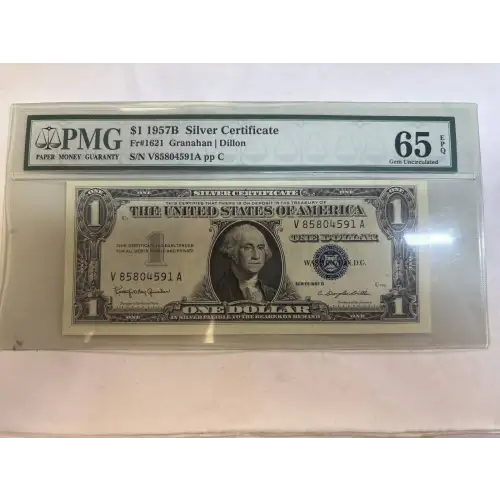
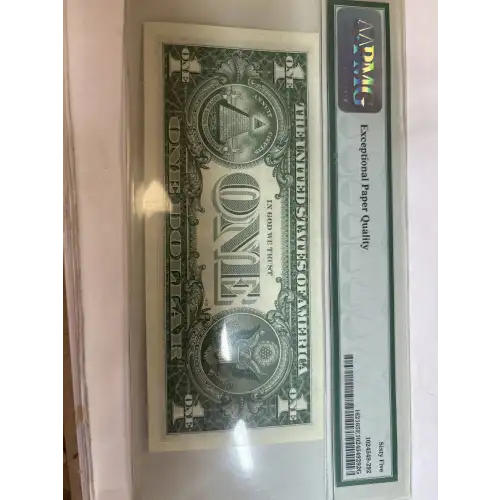
$1 1957 B Silver Certificate MS 65
Description
$1 1957 B Silver Certificate MS 65 - United States Collectible Paper Money
This exceptional $1 1957 B Silver Certificate graded MS 65 represents a significant piece of American numismatic history. Silver Certificates stand as some of the most sought-after collectible currency in the United States, valued both for their historical importance and their tangible silver backing. This particular specimen from 1957 exemplifies the craftsmanship and artistic design that characterized mid-20th century American currency production.
What is a Silver Certificate?
A Silver Certificate is a form of representative money issued by the United States government that could be exchanged for its face value in silver bullion. These certificates served as a promise that the U.S. government held silver reserves equivalent to the note's denomination. Silver Certificates were first issued in 1878 and became highly popular among collectors and investors alike. The phrase "Silver Certificate" appears prominently on the face of each note, distinguishing them from standard Federal Reserve Notes.
The 1957 B Series Overview
The 1957 B series represents one of the final chapters in the Silver Certificate story. By this time, Silver Certificates had already become iconic pieces of American monetary history. The "B" designation indicates this specific printing, which came after the initial 1957 A series release. The 1957 B Silver Certificate $1 note remains one of the most recognizable and collected denominations from this era.
Design and Aesthetic Features
The obverse (front) of this Silver Certificate features George Washington, America's first president, positioned in a dignified portrait that has graced the $1 bill since 1869. The reverse displays an intricate engraving of the Great Seal of the United States, complete with the eagle and shield design that symbolizes American sovereignty and strength. The note's green ink printing on white paper creates exceptional contrast, making it visually striking to collectors.
The detailed engraving work showcases the skill of the Bureau of Engraving and Printing artisans. Security features include intricate line work, watermarks, and serial numbers that make each note unique. The craftsmanship evident in these notes reflects the high standards maintained by the U.S. government during this period of currency production.
Grading and Condition: MS 65
This specimen has been professionally graded and certified as MS 65 (Gem Uncirculated), indicating exceptional preservation and quality. The "MS" designation stands for "Mint State," meaning this note has never been in general circulation. An MS 65 grade represents a note that is nearly perfect, with only minor imperfections visible upon close inspection. This high-grade condition makes it particularly desirable to serious collectors.
Notes in MS 65 condition typically exhibit bright, original color with minimal wear on the highest points of the design. The paper remains crisp and unwrinkled, and all security features are sharp and well-defined. For paper money collectors, obtaining notes in this condition is increasingly challenging, making MS 65 specimens particularly valuable.
Historical Timeline and Production Years
- 1957-1958: The 1957 B Silver Certificate series was printed during this timeframe
- Original Issue: First released into circulation in 1957
- 1957 A Predecessor: The 1957 A series preceded this B variant
- Later Years: Production of one-dollar Silver Certificates continued through the 1950s
- Legacy: These notes remained in limited circulation until they were eventually superseded by Federal Reserve Notes
Silver Content and Backing
One of the most compelling aspects of Silver Certificates is their historical connection to precious metals. When originally issued, holders of $1 Silver Certificates could theoretically exchange them for one dollar's worth of silver bullion from the U.S. government. This silver backing made them unique among American currency and contributed significantly to their collectibility today.
While modern Silver Certificates are no longer redeemable for silver, their historical association with precious metals continues to appeal to collectors interested in both numismatic and precious metal investments. The 1957 B Silver Certificate represents a tangible link to an era when American currency maintained direct backing by physical commodities.
Why Collectors Value 1957 B Silver Certificates
- Historical Significance: These notes represent the end of an era for Silver Certificate production
- Rarity: High-grade specimens like MS 65 examples become increasingly scarce
- Investment Appeal: Silver Certificates maintain strong collector demand and appreciation potential
- Aesthetic Quality: The design and engraving work exemplify American craftsmanship
- Monetary Nostalgia: These notes evoke interest in vintage American currency
- Condition Rarity: Finding notes that have remained uncirculated for decades is increasingly difficult
- Portfolio Diversification: Collectible paper money offers a unique alternative to traditional bullion
The End of the Silver Certificate Era
The 1957 B Silver Certificate represents a crucial moment in American monetary policy. By the late 1950s, the demand for silver was increasing, and the government's silver reserves were being depleted. This economic pressure ultimately led to significant changes in how the United States would back its currency.
The redemption of Silver Certificates for actual silver was suspended in 1968, making these notes purely numismatic collectibles rather than functional monetary instruments. Today, all Silver Certificates, including the 1957 B series, are valued exclusively as collectible pieces of currency history.
Preservation and Care
Maintaining the condition of a valuable $1 1957 B Silver Certificate requires careful handling. Collectors are advised to store these notes in archival-quality holders away from direct sunlight, extreme temperatures, and humidity fluctuations. Unlike coins, paper money is particularly vulnerable to environmental damage, moisture, and physical handling.
Professional grading and certification, as this note has received, provides both authentication and protection through specialized encapsulation. Many serious collectors choose to keep their high-grade notes in certified holders to preserve their exceptional condition.
Market Appeal and Collectibility
The 1957 B $1 Silver Certificate in MS 65 condition represents an excellent addition to any currency collection or precious metals portfolio. Demand for vintage American paper money has remained strong among collectors, investors, and history enthusiasts. Notes in exceptional condition command premium prices in the collectible currency market.
Whether you're a seasoned numismatist expanding an existing collection or a new collector beginning to explore American currency history, this certified specimen offers authenticity, beauty, and historical significance combined in one remarkable piece.
Conclusion
The $1 1957 B Silver Certificate MS 65 is more than just collectible paper money—it's a tangible connection to American financial history, craftsmanship, and the era when U.S. currency maintained backing by precious metals. Its exceptional MS 65 grade ensures that you're acquiring a specimen that has been professionally authenticated and preserved. This is a worthwhile addition for collectors of American currency, Silver Certificates, or vintage monetary instruments.
Specifications