
Published by
QC Coin Chief Coin Evaluator

Found an "In Cod We Trust" Quarter? Here is the Real Story
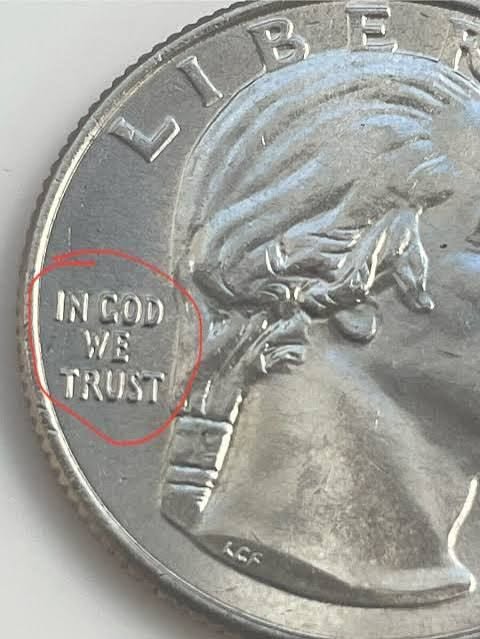
If you recently checked your pocket change and noticed a shiny new quarter where the word "God" looks exactly like "Cod", you are definitely not the only one. Social media hype and misleading online auctions might make you think you just struck gold, but the reality is much more ordinary.
These fishy-looking coins are from the American Women Quarters Program (2022–2025). While the back of each coin changes to honor a different historic woman, the front always features the right-facing portrait of George Washington.
Why Does the "G" Look Like a "C"?
This isn't a factory mistake. The illusion comes down to three simple factors:
- A Modern Font Update: In 2021, the U.S. Mint introduced a sleek new typeface based on a historic 1932 design by artist Laura Gardin Fraser. The "G" in this specific font is highly stylized with a very short, minimal tail on the bottom right. Without perfect lighting, it naturally resembles a "C."
- Standard Machinery Wear: Making millions of coins takes a heavy toll on the metal stamps (dies). As these stamps wear down over time, tiny details like the inner crossbar of a letter can become faint or fill in completely, worsening the illusion.
- Not an Official Error: True mint errors involve catastrophic mistakes like double strikes or using the wrong metal blanks. The "Cod" effect is simply a byproduct of intentional font design and normal manufacturing tolerances.
Do Grading Services Recognize It?
Major authenticators like PCGS and NGC will grade the overall condition of the coin, but they will not label it as an official "In Cod We Trust" error.
If you submit one of these quarters, it will receive a standard grade (like MS65) and a regular description label. Because this typography appears on hundreds of millions of quarters, grading companies treat it as a standard variation rather than a rare collectible. Furthermore, because these coins are so common, sending one in to be certified will cost you far more in grading fees than the quarter itself is worth.
Value and Marketplace Reality
Despite viral videos and ambitious eBay sellers listing these for hundreds or thousands of dollars, these quarters are only worth their 25-cent face value.
A quick look at the digital marketplace reveals the truth:
- Flooded Listings: You will find hundreds of "In Cod We Trust" listings online, often posted by new sellers using extreme buzzwords like "Ultra Rare!"
- Zero Sales: If you filter the search results to look only at items that actually sold, you will find that almost none of them ever close for a premium price.
- Mass Production: Because millions of these coins were released into circulation, holding one simply means you encountered a very common piece of modern currency.
How to Detect Coin Hype
Use this quick guide to spot online exaggeration before falling for the trap:
Hype Word / Red Flag | What It Actually Means |
"Unique / One-of-a-Kind" | Untrue; hundreds of millions share this exact design. |
Sellers with no feedback | A major warning sign of a flip attempt or a scam. |
Priced above 25 cents | Overpriced for a highly common, circulating coin. |
"Certified Error" (Without a slab) | Unverified marketing fluff; the coin is still face value. |
The Takeaway
The "In Cod We Trust" quarter is a fun example of how a stylized font and normal coin production can create a convincing optical illusion. It is a fantastic conversation piece and a great pun, but it isn't an error, it isn't rare, and it will always be worth exactly 25 cents.


