- Gold Au $4326.20 $-5.18
- Silver Ag $64.22 $-0.06
- Platinum Pt $1761.90 $0.00
- Palladium Pd $1339.50 $-4.37
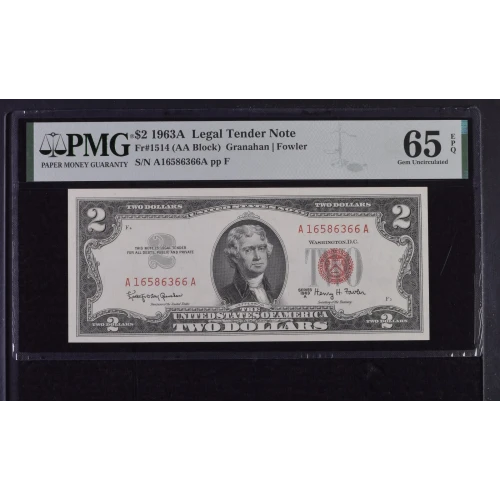
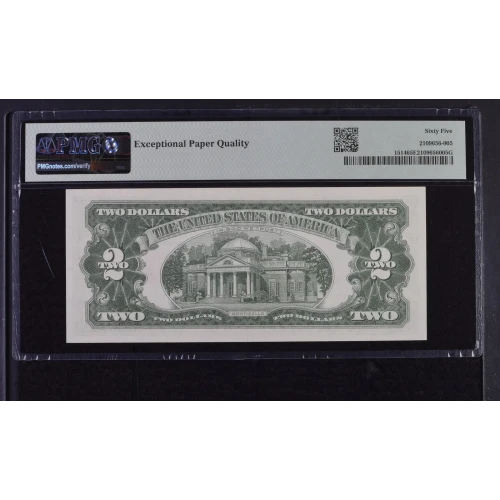
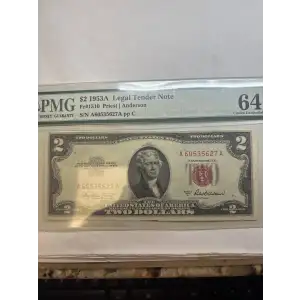
$2 1963 A Legal Tender Note
Description
$2 1963 A Legal Tender Note - A Rare and Historic Piece of American Currency
The $2 1963 A Legal Tender Note represents one of the most fascinating pieces of United States paper money for collectors and history enthusiasts alike. This distinctive denomination has captured the imagination of numismatists for decades, offering a unique window into American monetary history and the evolution of currency design. Whether you're a seasoned collector or just beginning your journey into vintage paper money, the $2 1963 A Legal Tender Note is an exceptional addition to any collection.
Overview of the $2 Legal Tender Note
The $2 bill, particularly the 1963 A series, stands as one of the most underappreciated and misunderstood denominations in American currency. Many people believe $2 bills are no longer in production or are extremely rare, yet these notes continue to be printed by the Bureau of Engraving and Printing to this day. The 1963 A series represents an important transitional period in the history of $2 note production, making it a particularly desirable item for serious collectors.
This Legal Tender Note features the iconic portrait of President Thomas Jefferson on the obverse, while the reverse showcases the magnificent engraving of the Declaration of Independence painting by John Trumbull. These beautiful designs have remained largely consistent since their introduction, maintaining a classic aesthetic that appeals to collectors worldwide.
History and Significance of the $2 Bill
The $2 bill has one of the most intriguing histories of any U.S. denomination. First issued in 1862, the $2 note was designed to help facilitate commerce and provide an alternative to other denominations in circulation. Throughout its long history, the $2 bill has experienced periods of popularity followed by significant decline, making it a unique artifact of American financial evolution.
Production of the $2 bill was halted in 1966 due to lack of public demand, leading many people to believe the denomination was discontinued entirely. This gap in production lasted nearly a decade until 1976, when the $2 bill was reintroduced in honor of the United States Bicentennial celebration. This historical context makes pre-1966 $2 notes, including the 1963 A series, particularly significant to collectors, as they represent the final years of the original continuous printing run.
The 1963 A Series - Key Details
The 1963 A series specifically refers to notes printed during 1963 with the "A" designation, which indicates a particular revision or printing variation. This series is characterized by specific security features and design elements that distinguish it from other years of production.
- Denomination: Two Dollars ($2)
- Series: 1963 A Legal Tender Note
- Obverse Design: Portrait of President Thomas Jefferson
- Reverse Design: The Declaration of Independence by John Trumbull
- Serial Numbers: Distinctive blue ink used for serial numbers and treasury seals
- Rarity Status: Moderately rare compared to other denominations from the same period
- Condition: Available in various grades from circulated to uncirculated
- Collecting Interest: Highly sought after by $2 bill specialists and general currency collectors
Production Years and Timeline
Understanding the production timeline of $2 bills helps collectors appreciate the significance of the 1963 A series:
- 1862-1966: The original era of continuous $2 bill production, including the 1963 A series
- 1963 Specifically: A transitional year representing the height of Cold War-era currency production
- 1966: Final year of this production run before the hiatus
- 1966-1976: The ten-year gap when $2 bills were not printed
- 1976-Present: The modern era of $2 bill production, beginning with the Bicentennial series
Design and Artistic Elements
The 1963 A $2 Legal Tender Note exemplifies the high standards of design and engraving that the Bureau of Engraving and Printing maintained throughout the mid-20th century. The obverse features a stately portrait of Thomas Jefferson, one of the Founding Fathers and principal author of the Declaration of Independence, making the choice of subject matter particularly appropriate for the reverse design.
The reverse presents John Trumbull's monumental painting "Declaration of Independence," which depicts the five-man drafting committee presenting their work to Congress on July 4, 1776. This artistic choice celebrates one of America's most pivotal moments and serves as a reminder of the nation's founding principles. The intricate engraving work required to reproduce this complex scene on currency demonstrates the exceptional skill of the artists and engravers at the Bureau.
The security features incorporated into the 1963 A series include distinctive design elements and printing techniques that were state-of-the-art for the period. The blue ink used for serial numbers and Treasury seals creates a distinctive appearance that immediately identifies these notes as belonging to the Legal Tender Note series from this era.
Why Collectors Seek the 1963 A $2 Note
The 1963 A $2 Legal Tender Note attracts collectors for multiple compelling reasons. First and foremost, it represents the tail end of an era of continuous production that spanned over a century. Notes from this period carry historical significance, as they were printed before the infamous production gap of 1966-1976.
Additionally, the relative scarcity of circulated $2 bills from this period makes finding specimens in excellent condition increasingly difficult. Many $2 bills from the 1960s were removed from circulation by collectors and banks, meaning that well-preserved examples command attention from serious numismatists. The 1963 A series, in particular, benefits from strong collector interest due to its position as one of the final pre-gap issues.
The historical context also appeals to collectors interested in Cold War-era Americana. The year 1963 was historically significant in the United States, and currency from this period serves as a tangible connection to this important moment in American history. For those collecting notes by series year, the 1963 A is a key addition that helps complete comprehensive collections of $2 bills.
Grading and Condition Considerations
Like all collectible paper money, the value and desirability of the 1963 A $2 Legal Tender Note is significantly influenced by its condition. Notes are typically graded on a scale that ranges from Poor to Gem Uncirculated, with professional grading services providing standardized assessments.
Notes in circulated condition show evidence of handling and may display wear, folds, or stains, yet retain all essential design elements and security features. These specimens offer an affordable entry point for collectors interested in vintage $2 bills. Lightly circulated notes retain much of their original crispness while showing minimal signs of wear, making them popular with collectors seeking a balance between affordability and visual appeal.
Uncirculated specimens are those that have never been in general circulation and show no signs of handling. These pristine examples represent the ideal for serious collectors and command premium prices relative to circulated examples. Gem Uncirculated notes, representing the highest grades of uncirculated specimens, are particularly sought after and may display exceptional eye appeal with original paper quality intact.
Interesting Facts About $2 Bills
Beyond the specific details of the 1963 A series, understanding broader $2 bill facts enriches appreciation of this denomination:
- The $2 bill remains legal tender and continues in limited production today, though most Americans rarely encounter them in everyday transactions
- The perceived rarity of $2 bills often causes banks and businesses to request them specifically or treat them as curiosities, further reducing circulation
- Thomas Jefferson was chosen for the $2 bill not only for his role as the Declaration's principal author, but also because his image appeared on the original $2 Legal Tender Notes issued in 1862
- The Trumbull painting used on the reverse has been a fixture of $2 bill design since 1896, making it one of the longest-running reverse designs in American currency
- The production gap from 1966 to 1976 created a mythical aura around $2 bills, with many people incorrectly believing the denomination was permanently discontinued
- Pre-1976 $2 bills often command a premium from collectors specifically because of their historical significance as products of the original continuous production era
Investment and Collectibility
The 1963 A $2 Legal Tender Note appeals to collectors for both its numismatic and historical value. While currency is not typically considered a high-return investment, vintage $2 bills from the pre-gap era have generally appreciated over time as awareness of their significance has grown among collectors.
The value of any particular specimen depends on multiple factors including series, condition, printing variety, and market demand. Notes with desirable printing characteristics or exceptional eye appeal may command significant premiums over common examples. Building a comprehensive $2 bill collection represents a rewarding pursuit for numismatists interested in American monetary history.
For those seeking to diversify their collectible holdings beyond precious metals, paper money from significant historical periods like the 1963 A series offers tangible connections to American heritage. The relatively modest pricing of $2 bills compared to rare coins or bullion makes them an accessible entry point into serious numismatic collecting.
Caring for Your 1963 A $2 Legal Tender Note
Proper storage and handling are essential for maintaining the condition of vintage paper money. Collectors should handle notes by the edges only, avoiding contact with the face or reverse to prevent oils from damaging the paper and ink. Specimens should be stored in a cool, dry environment away from direct sunlight, humidity, and temperature fluctuations.
Professional-grade currency holders and storage materials help protect notes from environmental damage and handling wear. Many serious collectors employ archival-quality sleeves or certified slabs that protect specimens while allowing for viewing and authentication verification. Maintaining detailed records of acquisition, provenance, and condition helps document collection value and heritage.
Building a Complete $2 Bill Collection
For collectors focusing specifically on $2 bills, the 1963 A Legal Tender Note represents an essential component of a comprehensive series collection. Building a complete set of $2 bills from different years and series provides a fascinating overview of American monetary policy and design evolution spanning nearly 160 years.
The 1963 A series fits naturally into collections focusing on the pre-gap era, offering collectors an opportunity to own a tangible piece of American financial history from this critical period. Its position as one of the final issues before the production hiatus makes it particularly significant for those documenting the complete timeline of $2 bill production.
Conclusion
The $2 1963 A Legal Tender Note stands as a remarkable piece of American currency, combining artistic beauty, historical significance, and numismatic appeal. Whether you're a dedicated currency collector, a history enthusiast, or someone exploring the fascinating world of vintage paper money, the 1963 A $2 bill offers exceptional value and interest.
This Legal Tender Note serves as a tangible reminder of America's monetary evolution while celebrating the nation's founding principles through its artistic design elements. As awareness grows regarding the historical importance of pre-gap $2 bills, specimens like the 1963 A series continue gaining recognition among serious numismatists worldwide. Add this significant piece of American heritage to your collection and connect with nearly two centuries of United States monetary history.
Specifications
Related products