$2 Obsolete

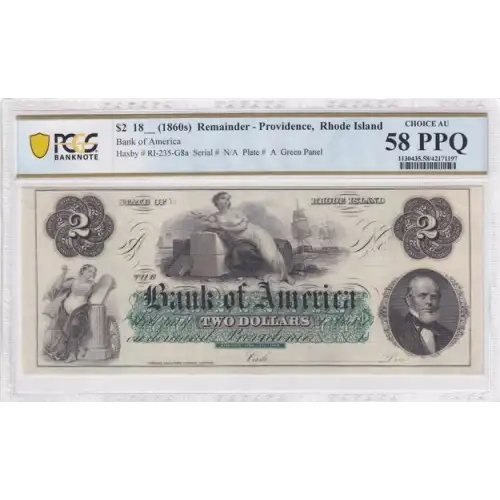
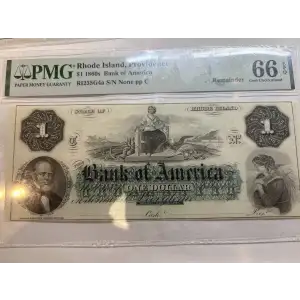
This exceptional $2 Obsolete Rhode Island Providence Remainder note represents a fascinating piece of American monetary history. Graded by PCGS at 58 PPQ (Choice About Uncirculated), this collectible paper money showcases the craftsmanship and historical significance of 19th-century American currency. This rare obsolete note is a must-have for serious numismatists and collectors of historical American paper money.

About Obsolete Rhode Island Currency

Rhode Island, one of the original thirteen colonies and founding states of the United States, has a rich banking and monetary history. During the 19th century, individual states and private banks issued their own currency before the federal government standardized American money. These obsolete notes from Rhode Island are now highly sought-after collectibles that offer a window into the nation's complex financial past.

The Providence banking system was particularly active during this era, with numerous financial institutions issuing their own notes as a form of currency. These Providence remainder notes are especially prized by collectors due to their historical importance and relative scarcity in high grades.

Key Historical Details

  • State: Rhode Island
  • City of Origin: Providence, Rhode Island
  • Denomination: $2
  • Type: Obsolete Currency (Private Bank Issue)
  • Grade: PCGS 58 PPQ (Choice About Uncirculated)
  • Grading Company: Professional Coin Grading Service (PCGS)
  • Era: 19th Century American Banking Period

Understanding Obsolete Notes

Obsolete paper money refers to currency issued by individual states, cities, and private banks that is no longer in production or legal tender. These notes were produced primarily during the 1800s, before the federal government centralized currency production. The term "obsolete" doesn't diminish the value—in fact, these historical documents are increasingly valuable to collectors.

The $2 denomination was particularly common during this era, making it an accessible entry point for many collectors interested in American obsolete currency. However, finding high-grade examples like this PCGS 58 specimen significantly increases both rarity and desirability.

The Importance of Providence Banking History

Providence, as one of New England's major commercial centers, housed numerous banks and financial institutions throughout the 19th century. These banks issued their own notes to facilitate local commerce and trade. The Providence remainder notes represent an important chapter in American financial history, demonstrating how banking operated before federal standardization.

Many of these Providence banks eventually failed or merged into larger institutions, making their original notes valuable historical artifacts. Collectors and historians treasure these Rhode Island obsolete notes for their intrinsic historical value and craftsmanship.

Grading and Condition: PCGS 58 PPQ

This note has been professionally graded by PCGS, one of the most respected and trusted grading services in numismatics. The grade of 58 PPQ indicates:

  • Numerical Grade (58): Choice About Uncirculated condition
  • PPQ Designation: Premium Paper Quality—indicating exceptional paper quality for its grade
  • Circulation Status: Minimal to light circulation evidence
  • Eye Appeal: Excellent overall appearance with strong color retention

At this grade level, the note exhibits impressive preservation with only minor signs of handling. The paper retains excellent color and crispness, while any wear marks are minimal and subtle. This level of preservation makes it particularly desirable for serious collectors and investors in American currency collectibles.

Why Collect Obsolete Rhode Island Notes?

Collecting obsolete paper money from Rhode Island offers numerous advantages for numismatists:

  • Historical Significance: Direct connection to 19th-century American commerce and banking
  • Regional Importance: Providence's role as a New England commercial hub
  • Rarity: Many notes were destroyed, lost, or heavily circulated, making survivors valuable
  • Affordability: Often more accessible than rare U.S. coins at comparable grades
  • Aesthetic Appeal: Beautiful engraving, artistic design, and historical imagery
  • Investment Potential: Steady appreciation in value as supplies diminish
  • Educational Value: Learn about American banking systems and state monetary policy

The Story Behind $2 Notes

The $2 denomination holds special significance in American currency history. While often overlooked today, $2 bills and notes were common during the 19th century. This particular $2 remainder note from Providence represents an important example of how banking institutions denominated their currency.

"Remainder notes" specifically refer to notes that were printed but never issued into circulation—they represent surplus inventory from the original printing runs. This explains why this specimen maintains such exceptional condition despite its age, making it even more desirable to collectors.

Paper Money Investing and Collecting

In recent years, American paper money has become an increasingly popular investment category alongside traditional numismatic collecting. The combination of historical significance, artistic value, and finite supply makes obsolete notes attractive to both collectors and investors. This PCGS-graded Rhode Island note offers both numismatic appeal and potential appreciation potential.

High-grade examples of obsolete notes consistently outperform lower-grade specimens, making premium specimens like this one particularly valuable. The PPQ designation further validates the exceptional quality of this particular note.

Preservation and Care

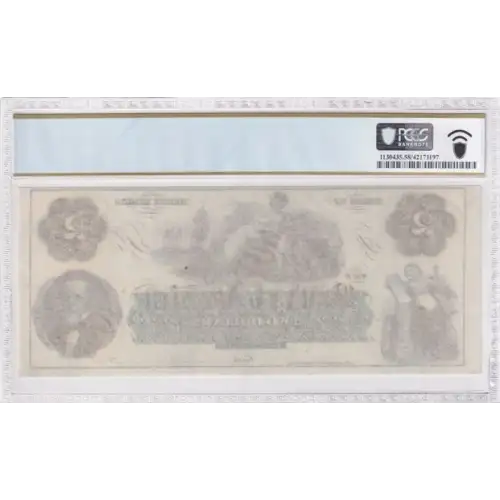
This professionally encapsulated PCGS holder provides optimal protection for this historical document. The tamper-evident slab preserves the note's condition while allowing full visibility of both sides. Proper storage in a cool, dry environment away from direct sunlight will maintain its value for generations to come.

A Collector's Treasure

Whether you're a seasoned numismatist specializing in obsolete currency, a regional historian interested in Rhode Island banking history, or a newcomer to paper money collecting, this $2 Providence remainder note represents an exceptional acquisition. The combination of PCGS 58 PPQ grading, historical importance, and superb eye appeal makes this a standout piece for any collection.

Don't miss the opportunity to own a genuine piece of American financial history. This rare obsolete Rhode Island paper money is a tangible connection to the 19th-century banking era and will serve as a valued centerpiece in any numismatic collection.

Product ID 562153
Series Year 18__ (1860s)
Country United States
Denomination $2
Grading Agency PCGS
Grade 58 PPQ
Signature -
Category Obsolete Currency
Serial No N/A
Status Active
Seal -
Fr / Pick # Various
Additional Info -

You must be authenticated to write reviews. Click here   to login.

There are no reviews yet. Be the first to write one!

$2 Obsolete Rhode Island, Providence Remainder PCGS 58 PPQ

+

Description

This exceptional $2 Obsolete Rhode Island Providence Remainder note represents a fascinating piece of American monetary history. Graded by PCGS at 58 PPQ (Choice About Uncirculated), this collectible paper money showcases the craftsmanship and historical significance of 19th-century American currency. This rare obsolete note is a must-have for serious numismatists and collectors of historical American paper money.

About Obsolete Rhode Island Currency

Rhode Island, one of the original thirteen colonies and founding states of the United States, has a rich banking and monetary history. During the 19th century, individual states and private banks issued their own currency before the federal government standardized American money. These obsolete notes from Rhode Island are now highly sought-after collectibles that offer a window into the nation's complex financial past.

The Providence banking system was particularly active during this era, with numerous financial institutions issuing their own notes as a form of currency. These Providence remainder notes are especially prized by collectors due to their historical importance and relative scarcity in high grades.

Key Historical Details

  • State: Rhode Island
  • City of Origin: Providence, Rhode Island
  • Denomination: $2
  • Type: Obsolete Currency (Private Bank Issue)
  • Grade: PCGS 58 PPQ (Choice About Uncirculated)
  • Grading Company: Professional Coin Grading Service (PCGS)
  • Era: 19th Century American Banking Period

Understanding Obsolete Notes

Obsolete paper money refers to currency issued by individual states, cities, and private banks that is no longer in production or legal tender. These notes were produced primarily during the 1800s, before the federal government centralized currency production. The term "obsolete" doesn't diminish the value—in fact, these historical documents are increasingly valuable to collectors.

The $2 denomination was particularly common during this era, making it an accessible entry point for many collectors interested in American obsolete currency. However, finding high-grade examples like this PCGS 58 specimen significantly increases both rarity and desirability.

The Importance of Providence Banking History

Providence, as one of New England's major commercial centers, housed numerous banks and financial institutions throughout the 19th century. These banks issued their own notes to facilitate local commerce and trade. The Providence remainder notes represent an important chapter in American financial history, demonstrating how banking operated before federal standardization.

Many of these Providence banks eventually failed or merged into larger institutions, making their original notes valuable historical artifacts. Collectors and historians treasure these Rhode Island obsolete notes for their intrinsic historical value and craftsmanship.

Grading and Condition: PCGS 58 PPQ

This note has been professionally graded by PCGS, one of the most respected and trusted grading services in numismatics. The grade of 58 PPQ indicates:

  • Numerical Grade (58): Choice About Uncirculated condition
  • PPQ Designation: Premium Paper Quality—indicating exceptional paper quality for its grade
  • Circulation Status: Minimal to light circulation evidence
  • Eye Appeal: Excellent overall appearance with strong color retention

At this grade level, the note exhibits impressive preservation with only minor signs of handling. The paper retains excellent color and crispness, while any wear marks are minimal and subtle. This level of preservation makes it particularly desirable for serious collectors and investors in American currency collectibles.

Why Collect Obsolete Rhode Island Notes?

Collecting obsolete paper money from Rhode Island offers numerous advantages for numismatists:

  • Historical Significance: Direct connection to 19th-century American commerce and banking
  • Regional Importance: Providence's role as a New England commercial hub
  • Rarity: Many notes were destroyed, lost, or heavily circulated, making survivors valuable
  • Affordability: Often more accessible than rare U.S. coins at comparable grades
  • Aesthetic Appeal: Beautiful engraving, artistic design, and historical imagery
  • Investment Potential: Steady appreciation in value as supplies diminish
  • Educational Value: Learn about American banking systems and state monetary policy

The Story Behind $2 Notes

The $2 denomination holds special significance in American currency history. While often overlooked today, $2 bills and notes were common during the 19th century. This particular $2 remainder note from Providence represents an important example of how banking institutions denominated their currency.

"Remainder notes" specifically refer to notes that were printed but never issued into circulation—they represent surplus inventory from the original printing runs. This explains why this specimen maintains such exceptional condition despite its age, making it even more desirable to collectors.

Paper Money Investing and Collecting

In recent years, American paper money has become an increasingly popular investment category alongside traditional numismatic collecting. The combination of historical significance, artistic value, and finite supply makes obsolete notes attractive to both collectors and investors. This PCGS-graded Rhode Island note offers both numismatic appeal and potential appreciation potential.

High-grade examples of obsolete notes consistently outperform lower-grade specimens, making premium specimens like this one particularly valuable. The PPQ designation further validates the exceptional quality of this particular note.

Preservation and Care

This professionally encapsulated PCGS holder provides optimal protection for this historical document. The tamper-evident slab preserves the note's condition while allowing full visibility of both sides. Proper storage in a cool, dry environment away from direct sunlight will maintain its value for generations to come.

A Collector's Treasure

Whether you're a seasoned numismatist specializing in obsolete currency, a regional historian interested in Rhode Island banking history, or a newcomer to paper money collecting, this $2 Providence remainder note represents an exceptional acquisition. The combination of PCGS 58 PPQ grading, historical importance, and superb eye appeal makes this a standout piece for any collection.

Don't miss the opportunity to own a genuine piece of American financial history. This rare obsolete Rhode Island paper money is a tangible connection to the 19th-century banking era and will serve as a valued centerpiece in any numismatic collection.

Specifications

Secure Transactions
Safeguarding Your Investments/Passion in Coins, Currency, or Bullion
We Buy Estates
We buy in-whole or in-part estates in 7 a state area.
Cash for Gold
Convert unwanted jewelry to cash or bullion
Your Cart


Continue to Checkout