- Gold Au $4009.30 $-13.61
- Silver Ag $56.96 $0.72
- Q Platinum1 Pt $1609.10 $-5.37
- Q Palladium1 Pd $1303.00 $18.97
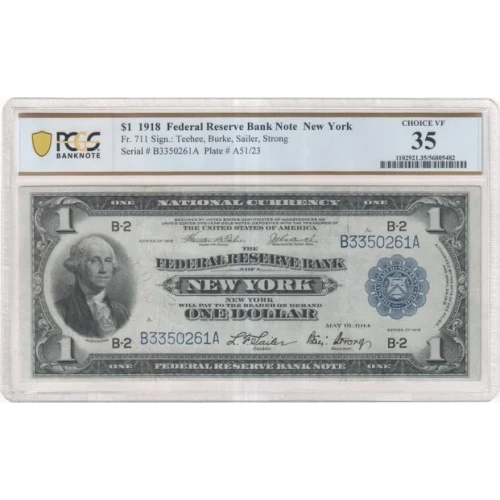
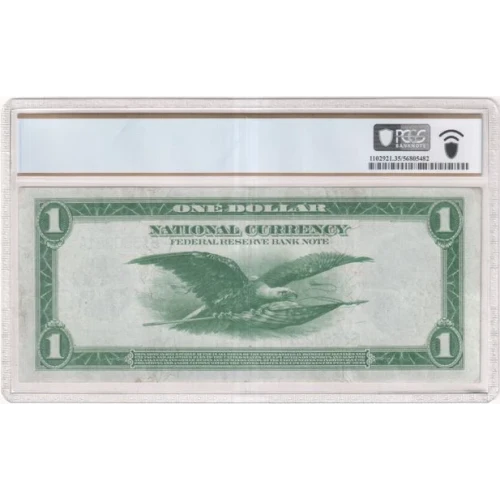
$1 1918 Federal Reserve Bank Notes 711 PCGS 35
Description
$1 1918 Federal Reserve Bank Notes Friedberg 711 PCGS 35 Collectible Currency
This exceptional $1 1918 Federal Reserve Bank Note represents a significant piece of American monetary history and numismatic artistry. Graded by PCGS at a Choice Very Fine 35 level, this Friedberg 711 note offers collectors a tangible connection to the early twentieth century, a transformative period in United States currency production and design. Whether you're an experienced currency collector or beginning your numismatic journey, this 1918 Federal Reserve Bank Note stands as a remarkable investment opportunity and historical artifact.
Overview of the $1 1918 Federal Reserve Bank Note
The $1 Federal Reserve Bank Note from 1918 is among the most sought-after pieces of American paper currency. These notes were produced during a pivotal moment in U.S. history, coinciding with the final years of World War I. The Federal Reserve Bank Notes represent a unique chapter in American currency evolution, distinct from the standard Federal Reserve Notes that eventually became the standard for U.S. paper money.
This particular note, catalogued as Friedberg 711, carries significant collectibility due to its age, historical context, rarity, and overall condition. The PCGS grading of 35 indicates a Choice Very Fine example—a note that displays attractive features while retaining the character marks of genuine circulation and age.
Production History and Years of Issue
- Year Issued: 1918 - During the final year of World War I
- Series: Federal Reserve Bank Notes (distinct from Federal Reserve Notes)
- Denomination: One Dollar
- Production Period: 1918 was the last year these specific Federal Reserve Bank Notes were produced
- Catalog Reference: Friedberg 711 - The standard reference guide for U.S. paper currency
- Grading Authority: PCGS (Professional Coin Grading Service) - A premier third-party authentication service
- Grade Assessment: 35 (Choice Very Fine) - Represents an attractive, above-average condition example
Understanding Federal Reserve Bank Notes
Federal Reserve Bank Notes occupy a unique position in American currency history. Unlike the Federal Reserve Notes that would eventually standardize U.S. paper money, these notes were issued by individual Federal Reserve Banks and featured the distinctive seal and charter number of the issuing bank. This decentralized approach to currency production created numerous varieties and collectible opportunities for numismatists.
The 1918 $1 Federal Reserve Bank Note represents the transition period in American monetary policy. These notes were produced in relatively limited quantities compared to later currency issues, making surviving examples increasingly valuable to collectors. The designs on these notes showcase the artistic standards of the era, featuring classical imagery and intricate engraving work that remains impressive to modern observers.
Design and Aesthetic Features
The $1 Federal Reserve Bank Note from 1918 displays the characteristic design elements of its era. The note features portraits of prominent American figures, ornate border designs, and the distinctive Federal Reserve Bank seal. The green ink used for security features on the reverse side has developed a patina consistent with age and circulation, adding to the note's authentic historical character.
The typography and engraving quality reflect the high standards of the U.S. Bureau of Engraving and Printing during this period. Text indicating "Federal Reserve Bank Note" appears prominently, distinguishing this note from other currency types. The specific issuing Federal Reserve Bank is clearly identified through its charter number and regional designation.
Condition and PCGS Grade 35 Assessment
A PCGS grade of 35 places this note in the Choice Very Fine category, indicating a note that has experienced some circulation but retains considerable appeal and eye appeal. At this grade level, collectors can expect:
- Clear and legible printing with excellent detail visibility
- Moderate wear consistent with period circulation
- Well-preserved color and ink that demonstrates the note's age
- No major tears, holes, or significant damage
- Corners and edges showing character appropriate to its age
- Creasing pattern typical of genuine circulation
- Attractive overall appearance suitable for prominent display
The Choice Very Fine grade offers an excellent balance for collectors—the note displays authentic history and character while maintaining strong visual appeal and detail preservation. This grade level is often preferred by serious collectors who value both authenticity and aesthetics.
Historical Context: 1918 in American History
The year 1918 holds profound significance in American history. As World War I drew to a conclusion, the United States' role in global affairs expanded dramatically. The Federal Reserve System, established only five years earlier in 1913, was managing currency production to support the nation's war effort and economic needs. Currency issued during this period carries the weight of historical importance and the tumultuous events that shaped modern America.
The economic conditions of 1918 were unlike any the nation had previously experienced. The Federal Reserve was actively managing the money supply to support military operations and maintain economic stability. Paper currency played a critical role in these efforts, making 1918-dated notes particularly significant to historians and collectors of American economic history.
Collectibility and Investment Appeal
The $1 1918 Federal Reserve Bank Note, Friedberg 711, PCGS 35 represents a sound addition to any serious currency collection. Several factors contribute to its collectibility and potential investment value:
- Historical Significance: Direct connection to World War I era American history
- Rarity: Declining population of well-preserved examples makes surviving notes increasingly valuable
- Age: Over 100 years old, making this a genuine antique collectible
- Authentication: PCGS grading provides professional verification of authenticity and condition
- Type Rarity: Federal Reserve Bank Notes are distinctly different from Federal Reserve Notes, appealing to type collectors
- Grade Balance: The 35 grade offers strong eye appeal without premium pricing for higher grades
- Established Market: Strong collector demand and established pricing for Federal Reserve Bank Notes
The Friedberg Catalog System
The Friedberg catalog system, developed by numismatic expert Robert Friedberg, serves as the standard reference guide for U.S. paper currency. When a note is identified as "Friedberg 711," experienced collectors immediately understand its specific characteristics, design type, and relative rarity within the broader context of American currency. This cataloging system ensures that collectors worldwide can communicate about notes using a universally recognized standard.
The Friedberg reference number provides significant convenience for collectors researching their acquisitions, comparing values, and understanding the relative scarcity of different note varieties. This standardized approach to categorization has made currency collecting more accessible and organized for enthusiasts at all experience levels.
Why Collect Federal Reserve Bank Notes?
Federal Reserve Bank Notes offer unique advantages to currency collectors compared to other paper money types:
- Represent a distinct and transitional period in American currency history
- Offer numerous varieties based on issuing Federal Reserve Bank and series
- Display exceptional artistry and engraving quality
- Provide excellent educational value regarding Federal Reserve history
- Appeal to both specialized and general currency collectors
- Offer better value than higher-denomination notes from the same period
- Connect collectors to the era of the Great War and its economic consequences
Care and Preservation
This 1918 Federal Reserve Bank Note has been professionally graded and encapsulated by PCGS, providing superior protection and authentication. The sonically sealed holder protects the note from environmental contaminants, handling damage, and deterioration. Collectors should maintain this protective encapsulation, avoiding unnecessary handling or exposure to direct sunlight, extreme humidity, or temperature fluctuations.
Proper storage in a climate-controlled environment will help preserve this note for future generations. If the note is displayed, UV-protective glass should be used to minimize fading of the ink and paper over time. The investment in preservation today ensures that this historical artifact maintains its condition and value for years to come.
Perfect Addition to Established Collections
Whether you're completing a Federal Reserve Bank Note collection, building a type collection of American currency, or seeking significant historical artifacts, the $1 1918 Federal Reserve Bank Note, Friedberg 711, PCGS 35 delivers authentic historical value and numismatic merit. This note represents genuine American heritage, careful craftsmanship, and a tangible connection to one of the most significant periods in modern world history.
The Choice Very Fine grade ensures strong eye appeal and impressive visual presentation while maintaining authentic patina and character that discerning collectors appreciate. This is not merely a piece of paper—it's a window into American economic history, Federal Reserve operations, and the currency systems that powered a nation through extraordinary times.
Invest in American Numismatic History
The $1 1918 Federal Reserve Bank Note, Friedberg 711, PCGS 35 represents an exceptional opportunity to acquire a scarce, historically significant piece of American currency. As time passes and surviving examples in fine condition become increasingly rare, the importance of securing quality examples of Federal Reserve Bank Notes becomes ever more apparent. This note stands ready to become a cherished centerpiece of your collection, combining investment potential with genuine historical and educational value.
Specifications