
- Gold Au $4360.20 $-50.93
- Silver Ag $64.86 $-0.68
- Platinum Pt $1737.30 $-34.15
- Palladium Pd $1354.00 $-47.28
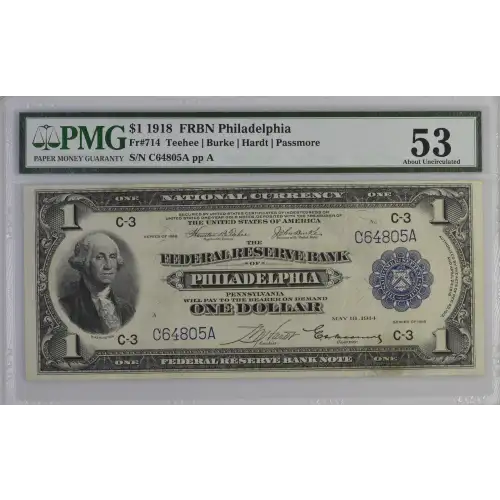
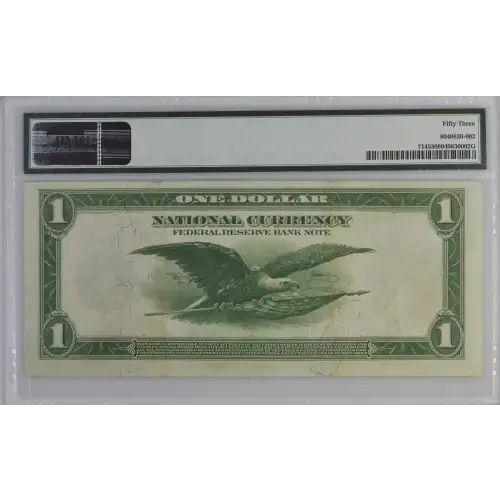
Teehee Burke Hardt Passmore
Description
1918 $1 FR#714 Teehee Burke Hardt Passmore Federal Reserve Note
This exceptional 1918 $1 Federal Reserve Note bearing the signatures of Teehee, Burke, Hardt, and Passmore represents a significant piece of American monetary history. The FR#714 designation identifies this as a highly collectible variant of the Series 1914 Federal Reserve Note, making it a prized addition to any serious numismatic collection. These notes are increasingly sought after by collectors and historians alike, particularly those interested in early 20th-century United States currency.
Historical Significance and Background
The year 1918 holds tremendous importance in American history, marking the final year of World War I. During this period, the United States government was managing significant economic demands and monetary policy adjustments. The Federal Reserve system, established just a few years earlier in 1913, was still relatively new and working to stabilize the nation's currency. This particular note from 1918 exemplifies the transitional nature of American currency during this pivotal era.
Federal Reserve Notes represented a fundamental shift in American monetary policy. Unlike earlier United States Notes, Federal Reserve Notes were backed by commercial paper and other assets held by the Federal Reserve Banks, rather than being direct obligations of the U.S. Treasury. This innovation was revolutionary for its time and demonstrated the growing sophistication of American financial institutions.
Signature Combinations and Rarity
The signature combination of Teehee, Burke, Hardt, and Passmore makes this note particularly notable among collectors. Joseph W. Teehee served as the Treasurer of the United States, while Burke held the position of Secretary of the Treasury. Hardt and Passmore were Register and Assistant Register of the Treasury, respectively. This specific signature combination represents a distinct period in American monetary history, with each signature combination carrying its own collector value and historical context.
- Teehee & Passmore: Joseph W. Teehee served as Treasurer of the United States from 1911 to 1913
- Burke & Hardt: Burke served as Secretary of the Treasury during William Howard Taft's administration
- Collectibility: Specific signature combinations can affect the value and desirability of Federal Reserve Notes among collectors
- Serial Numbers: Individual serial numbers make each note unique, with certain number combinations being particularly sought after
Series 1914 Federal Reserve Notes - Production Details
The Series 1914 Federal Reserve Note was one of the most important currency series in American history. These notes were produced with distinctive design elements that reflected the security standards and artistic preferences of the early 20th century. The denominations and designs were standardized across all Federal Reserve district banks, though subtle variations in signatures and serial numbers created hundreds of distinct varieties.
The production of these notes extended over a period of several years, with different Federal Reserve districts receiving their allocations based on regional economic needs. The 1918 issue date indicates this note was produced during the height of World War I, when currency demands were particularly high due to wartime government spending and mobilization efforts.
Design and Artistic Elements
The $1 Federal Reserve Note from this period features classic American iconography and engraving work that represents the height of currency design craftsmanship. The obverse typically features the portrait of George Washington, rendered with the precision and artistry characteristic of Bureau of Engraving and Printing work. The reverse showcases an eagle design that has become iconic in American numismatic history.
The green ink used on both sides of the note provides both aesthetic appeal and security features that were advanced for their time. The intricate line work and detailed vignettes demonstrate the exceptional skill of the engravers who created these designs. Collectors often appreciate not only the historical significance but also the artistic quality of these notes.
Condition and Collectibility Factors
The condition of a 1918 $1 FR#714 Teehee Burke Hardt Passmore note significantly influences its value and appeal to collectors. Notes in pristine condition, with no folds, tears, or significant discoloration, command premium prices. However, even well-circulated examples of this series retain considerable collector value due to their age and historical importance.
Several factors affect the collectibility and valuation of this note:
- Serial Number Rarity: Low serial numbers, fancy serial numbers, or solid serial numbers can dramatically increase value
- Preservation: Uncirculated notes are worth significantly more than circulated examples
- Color Vibrancy: Notes with bright, unfaded green ink are more desirable
- Signature Combination Demand: Certain signature combinations are more sought after by collectors
- Federal Reserve District: Some districts issued fewer notes, making certain varieties rarer
- Historical Provenance: Notes with documented collecting history or notable provenance can command premium prices
Federal Reserve District Variations
Federal Reserve Notes from 1914 were produced by twelve different Federal Reserve district banks across the country. Each district bank had specific letters and corresponding cities printed on their notes. These district variations represent different production runs and quantities, with some districts producing far fewer notes than others. This geographical element adds another dimension to collecting these notes, as enthusiasts often attempt to complete sets representing all twelve Federal Reserve districts.
Investment and Collecting Appeal
1918 $1 Federal Reserve Notes have proven to be sound investments for numismatists and history enthusiasts. As these notes continue to age, their availability decreases while historical demand remains steady or increases. Collectors recognize that authentic examples from this period represent tangible pieces of early 20th-century American financial history.
The Teehee Burke Hardt Passmore signature combination is particularly attractive to collectors who focus on building comprehensive collections of Federal Reserve Note signature varieties. This note represents one specific combination among many, making it an essential piece for serious collectors pursuing completeness in their collections.
Authentication and Verification
As with all rare and valuable currency, authentication is crucial when acquiring a 1918 $1 FR#714 Teehee Burke Hardt Passmore note. Reputable sellers provide detailed descriptions, high-quality images, and often professional grading from recognized numismatic authentication services. Expert evaluation ensures that buyers receive genuine, accurately described specimens that meet their collecting objectives.
Historical Context - 1918 in America
The year 1918 was momentous for the United States. The nation was actively engaged in World War I, with significant implications for the economy, monetary policy, and financial institutions. The Federal Reserve was managing the economic demands of wartime while maintaining currency stability. Federal Reserve Notes issued during this period thus carry the weight of significant historical events.
Additionally, 1918 marked the final year of the great influenza pandemic, which devastated populations worldwide. The economic disruptions of both the war and the pandemic make currency from this period particularly significant from a historical perspective. Collectors interested in tangible artifacts from this transformative year find genuine appeal in owning authentic period currency.
Why Collect 1918 Federal Reserve Notes?
- Historical Importance: These notes document a critical period in American monetary history and financial system development
- Artistic Merit: The design and engraving work represent exceptional craftsmanship from the early 20th century
- Tangible History: Holding an original note from 1918 provides a direct connection to American history
- Variety and Specialization: Signature combinations, serial numbers, and Federal Reserve districts provide endless collecting opportunities
- Increasing Scarcity: As original notes are removed from circulation through collecting and preservation, their rarity increases
- Investment Potential: Well-selected examples have demonstrated appreciation over time
- Numismatic Community: Collectors benefit from a vibrant community of experts, dealers, and fellow enthusiasts
Care and Preservation Recommendations
Proper preservation is essential for maintaining the condition and value of a 1918 $1 Federal Reserve Note. These notes should be stored in archival-quality holders that do not contain harmful chemicals or acids. Exposure to light, moisture, and extreme temperature fluctuations should be minimized. Many serious collectors employ PVC-free holders and maintain consistent environmental conditions for their collections.
Handling should be kept to a minimum, with direct contact limited when possible. Clean hands and careful movement are essential when examining or displaying notes. Professional conservation should only be undertaken by experts familiar with currency preservation, as improper handling can diminish rather than enhance value.
The Complete Collecting Experience
Acquiring a 1918 $1 FR#714 Teehee Burke Hardt Passmore note represents more than a financial transaction—it is an opportunity to own a tangible artifact from a remarkable period in American history. Whether your interest lies in Federal Reserve Note varieties, early 20th-century currency, World War I memorabilia, or general American history, this note offers multiple layers of historical and numismatic appeal.
This exceptional piece of monetary history awaits collectors and historians seeking to understand and appreciate the evolution of American currency and financial institutions.
Specifications
