
- Gold Au $4337.30 $-23.38
- Silver Ag $66.41 $-0.86
- Platinum Pt $1832.60 $-23.61
- Palladium Pd $1332.00 $-13.54
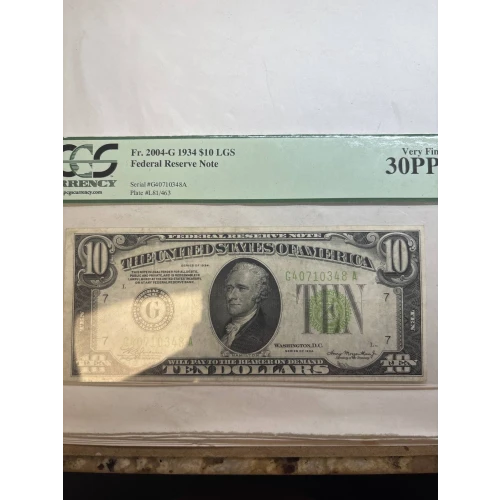
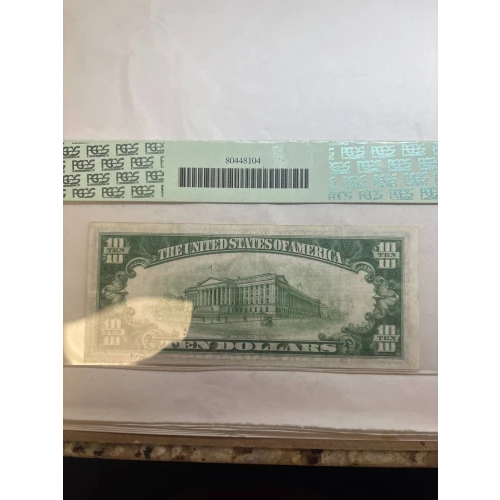
$10 1934 Exists with both light and dark Green seals Small Size $10 Federal Reserve Notes 2004-G PCGS 30 PPQ
Description
1934 $10 Federal Reserve Note with Green Seal – A Cornerstone of American Currency History
This exceptional $1934 $10 Federal Reserve Note featuring a green seal represents a significant piece of numismatic history. Graded by PCGS as 30 PPQ (Choice Very Fine), this Small Size $10 note from the 2004-G series exemplifies the craftsmanship and historical importance of early 20th-century American currency. Whether you're a seasoned collector or a beginning enthusiast, this note offers both aesthetic appeal and investment potential.
Understanding the 1934 $10 Federal Reserve Note
The $10 bill has long been a staple of American commerce and currency design. The 1934 series represents a transitional period in U.S. currency production when the green seal variant was standard across Federal Reserve Notes. This particular specimen showcases the detailed engraving work and historical significance that makes vintage paper money so valuable to collectors worldwide.
Key Features of This Collectible Note
- Denomination: $10 United States Federal Reserve Note
- Series Year: 1934
- Seal Color: Green (noted for existing in both light and dark variations)
- Size Classification: Small Size Format
- Series Designation: 2004-G
- Grading Authority: PCGS (Professional Coin Grading Service)
- Grade: 30 (Choice Very Fine)
- Special Designation: PPQ (Preferred Paper Quality)
Historical Background of 1934 Federal Reserve Notes
The 1934 series of Federal Reserve Notes holds special significance in American monetary history. This was during the era of the Great Depression, a time when currency and financial stability were of paramount concern to the American public. The notes from this period were carefully designed and printed to maintain public confidence in the nation's monetary system.
The transition to the Small Size format had occurred just one year prior, in 1933, making 1934 notes among the earliest examples of the modern-sized currency that Americans continue to use today. This makes 1934 notes particularly desirable among collectors who appreciate the historical transition point they represent.
The Green Seal Mystery: Light vs. Dark Variations
One of the most intriguing aspects of this particular note is the documented existence of both light and dark green seal variations in the 1934 series. This variation has fascinated collectors and numismatists for decades, as it suggests variations in the printing process or materials used during different production runs.
The green seal on Federal Reserve Notes has represented the agency's authority to issue currency since 1914. However, the shade variations found in 1934 notes add an extra layer of collecting interest. Some variations are the result of different ink batches, paper aging, storage conditions, or printing press settings used at various Federal Reserve Banks across the country.
Understanding PCGS Grading and PPQ Designation
This note has been professionally graded and encapsulated by PCGS, one of the most respected grading services in the numismatic industry. The grade of 30 corresponds to "Choice Very Fine" condition, which indicates the note has been in circulation but has been well-preserved.
At this grade level, the note displays vibrant color, clear detail in the engraving, and minimal signs of wear. The creases and folds typical of circulated notes are present but light, and the paper remains relatively crisp. The design elements, including portraits and architectural details, remain sharp and well-defined.
The PPQ (Preferred Paper Quality) designation is a special PCGS distinction awarded to notes that exhibit superior eye appeal and paper quality compared to other notes at the same grade level. This means that among other 30-graded notes, this example stands out for its exceptional appearance and condition relative to its grade.
The 2004-G Series Designation Explained
The "2004-G" designation provides important information about the note's production. The numeric portion (2004) refers to the specific printing sequence or series of the note, while the letter designation "G" indicates that this note was produced at the Federal Reserve Bank of Chicago, which is identified by the "G" letter.
Different Federal Reserve Banks across the United States have their own letter designations, and notes produced by different banks can show subtle variations. Chicago's Federal Reserve Bank produced high volumes of currency during this period, making notes from this facility relatively available but still highly collectible.
Why Collectors Seek 1934 $10 Notes
Collectors of vintage American currency seek 1934 $10 notes for several compelling reasons. First, they represent an important transitional period in U.S. currency design and production. Second, they offer more affordable access to quality vintage paper money compared to some other rare notes. Third, their historical significance during the Depression era makes them conversation pieces with genuine historical importance.
Additionally, the variation between light and dark green seals adds a layer of collecting challenge and interest. Some collectors focus specifically on obtaining examples of each variation, making these notes popular within specialized collecting circles.
Condition and Preservation
The PCGS 30 grade indicates this note has been well-cared for despite its age. At nearly 90 years old, the note still retains remarkable visual appeal. The paper remains relatively supple without significant brittleness, a sign of proper storage and handling over the decades.
For collectors considering this note for their collection, it's important to understand that further preservation beyond its current encapsulation should be minimal. PCGS encapsulation has become the standard in the industry for protecting paper money while allowing for display and appreciation of the note's design.
Investment Potential
While collecting paper money should primarily be pursued for the enjoyment of owning pieces of history, vintage notes like this 1934 $10 Federal Reserve Note have demonstrated solid appreciation potential over time. As the population of well-preserved examples diminishes through loss and damage, those in quality condition such as this PPQ example tend to increase in desirability.
The combination of age, grade, special PPQ designation, and the interesting seal variation characteristics make this a note worth serious consideration for collectors and investors alike.
Display and Collecting Tips
If you acquire this note or others like it, proper display is important. Keep the PCGS holder in a stable environment away from extreme temperature fluctuations, high humidity, and direct sunlight. Many collectors use archival-quality display cases or albums specifically designed for paper money storage.
Avoid handling the note beyond necessary examination, and never attempt to remove it from its professional holder. The encapsulation provides protection while still allowing you to appreciate the full visual details of this historical currency.
A Piece of American History
Owning a 1934 $10 Federal Reserve Note with green seal isn't just about acquiring an investment or a collectible—it's about preserving a tangible piece of American history. This note circulated during one of the most significant periods in American economic history and represents the resilience and stability of the U.S. monetary system.
Whether you're building a comprehensive collection of $10 notes, focusing specifically on 1934 series currency, or seeking examples with specific seal variations, this PCGS 30 PPQ specimen offers exceptional quality and historical significance. Its Place in American numismatic history, combined with its superior preservation, makes it a worthy addition to any serious collection of vintage United States currency.
Perfect for Collectors and Enthusiasts
This $10 Federal Reserve Note appeals to a wide range of collectors: Depression-era history enthusiasts, paper money specialists, U.S. currency completionists, and investors in alternative collectibles. The broad appeal of $10 notes, combined with the specific historical period and the technical collecting challenges presented by seal variations, makes this note a versatile addition to any collection.
Add this exceptional example of 1934 currency history to your collection today and own a piece of American numismatic heritage.
Specifications
