1803 Large Cents Draped Bust NGC F-12 BN

1803 Large Cents Draped Bust NGC F-12 BN - Historic Early American Copper Coin

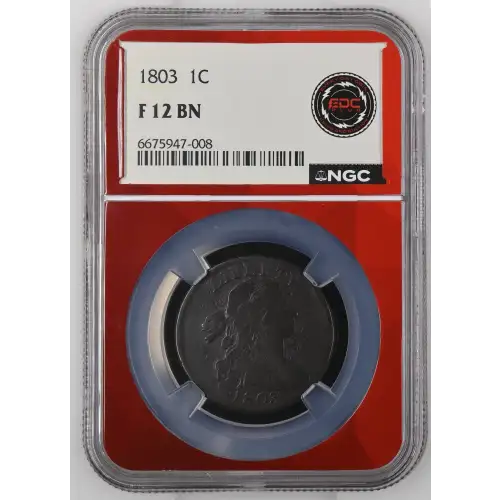
The 1803 Large Cent Draped Bust is one of the most iconic and historically significant coins in American numismatic history. This exceptional piece represents a pivotal era in U.S. currency production and remains highly sought after by collectors and investors alike. Our NGC-graded F-12 BN (Fine 12, Brown) specimen offers an outstanding opportunity to own a genuine artifact from the early years of the United States Mint.

Coin Specifications

  • Year of Issue: 1803
  • Denomination: One Cent (Large Cent)
  • Mint Mark: Philadelphia (no mint mark)
  • Design Type: Draped Bust
  • Obverse Designer: Robert Scot
  • Composition: Copper (100%)
  • Weight: Approximately 10.89 grams
  • Diameter: 29 mm
  • Edge: Plain
  • Certification: NGC (Numismatic Guaranty Company)
  • Grade: F-12 (Fine)
  • Color Designation: BN (Brown)
  • Total Mintage: 3,131,691 coins

Design and Obverse Features

The obverse of the 1803 Large Cent showcases Lady Liberty depicted in profile, facing left, adorned with her characteristic draped bust design. Her hair is delicately rendered with classical styling, and she wears a simple draped garment that exemplifies the neoclassical artistic movement popular during the early republic period. The word "LIBERTY" appears along the upper left portion of the coin, while the date "1803" is positioned prominently at the bottom.

The Draped Bust design, created by renowned engraver Robert Scot, represents the second iteration of Liberty's portrayal on American large cents. This design was utilized from 1796 through 1807, making it a key component of early American numismatic history. The artistic quality and attention to detail in the bust design reflect the aspirations of the young nation to create dignified and classical currency.

Reverse Features

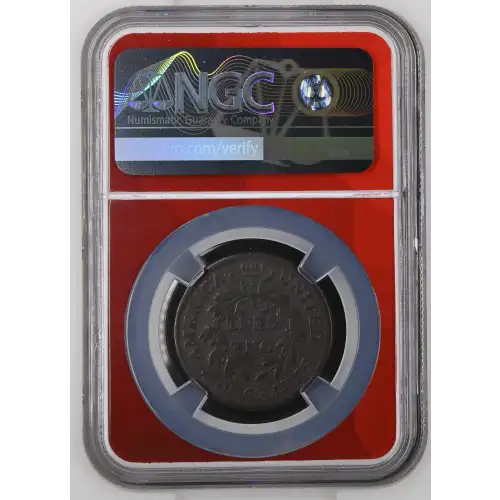
The reverse side of this 1803 Large Cent features an impressive wreath design that encircles the denomination marking. The wreath, composed of various flora including corn, wheat, and laurel leaves, symbolizes agricultural prosperity and American abundance. Within the wreath's center, the denomination "ONE CENT" is clearly inscribed, establishing the coin's face value. A small olive branch is sometimes visible within the wreath, adding to the symbolic representation of peace and growth.

Historical Significance and Context

The year 1803 holds profound importance in American history, occurring during the presidency of Thomas Jefferson. This was the same year as the Louisiana Purchase, one of the most significant territorial acquisitions in United States history. The large cent was the workhorse of American commerce during this period, serving as the primary medium of exchange for everyday transactions among the common citizens of the young republic.

The United States Mint, established in Philadelphia in 1792, had been producing large cents for only eleven years when this coin was struck. The operation was still relatively new, and coins from this early period are considered especially valuable to collectors due to their historical significance and limited surviving quantities in quality condition.

The Large Cent Era

Large cents remained the standard copper coinage of the United States from 1793 until 1857, when they were replaced by the smaller Indian Head Cent. The 1803 Large Cent therefore represents a coin from the very beginning of this lengthy series. These larger format cents, measuring nearly 29 millimeters in diameter, were substantially more substantial than their modern penny successors and were struck with greater force, resulting in varying degrees of wear depending on circulation.

The mintage figure of 3,131,691 coins for the 1803 Large Cent was respectable for the era, but the vast majority of these pieces were lost to time, melted down, or worn beyond recognition through decades of circulation. High-quality surviving examples have become increasingly scarce, making graded specimens particularly valuable.

Grade Assessment: Fine-12 (F-12) Condition

This specimen has been certified by the Numismatic Guaranty Company (NGC) at a grade of F-12, which indicates Fine condition. At the F-12 level, the coin displays moderate wear consistent with honest circulation. The major design elements remain clear and identifiable, though some finer details have been worn smooth through handling and commerce.

In F-12 condition, the obverse typically shows Liberty's profile with bold definition, though some softness may appear on the highest points of her hair and cheek. The date remains fully legible and distinct. On the reverse, the wreath design maintains good definition throughout, with the ONE CENT denomination unmistakable. This grade represents an excellent balance between affordability and visual appeal for collectors seeking genuine early American currency.

Brown (BN) Patina Classification

The BN designation indicates that this Large Cent exhibits a brown patina or toning. This brown coloration is a natural result of the copper's oxidation process over approximately two centuries. Rather than detracting from the coin's appeal, the rich brown patina often enhances collector appreciation, as it provides visual evidence of the coin's age and authenticity. The brown toning demonstrates that this is an original piece that has not been cleaned or artificially altered.

Why Brown Patina Matters

Collectors prefer original patina on early copper coins because artificial cleaning can significantly reduce numismatic value. A naturally toned brown example serves as proof that the coin has maintained its integrity throughout its lifespan. The even brown color indicates careful preservation over the years, despite the coin's obvious circulation wear.

Collector Appeal and Rarity

The 1803 Large Cent Draped Bust remains one of the most accessible early date large cents for collectors beginning to build comprehensive U.S. type sets or date collections. However, availability of certified, problem-free examples in middle grades like F-12 has diminished considerably over the past decades as collections have been consolidated and competition among collectors has intensified.

For numismatists specializing in early United States coinage, the 1803 represents a pivotal year in American history. Those collecting the complete Draped Bust Large Cent series find the 1803 date readily available compared to scarcer dates from 1804-1807, making it an ideal anchor piece for such a collection.

Investment Potential

Early date large cents have consistently demonstrated strong performance in the numismatic marketplace. As a piece of American financial history and with genuine scarcity of high-quality examples, the 1803 Large Cent appeals to both serious collectors and investors seeking tangible assets with historical significance. The NGC certification provides authentication and grade consistency, factors that appeal to institutional buyers and long-term investors.

Authenticity and Certification

This coin has been professionally authenticated and graded by the Numismatic Guaranty Company, one of the two most respected third-party grading services in the numismatic industry. NGC's rigorous examination and grading standards ensure that you are acquiring exactly what is represented. Each NGC-certified coin includes a detailed holder with tamper-evident sealing, providing both protection and verification of authenticity.

Display and Preservation

The NGC slab in which this coin is housed provides optimal protection from environmental damage and handling wear. The transparent holder allows for examination of the coin from all angles while maintaining preservation conditions. For long-term storage, keeping the coin in its NGC holder and storing it in a cool, dry location will ensure preservation for generations to come.

Historical Timeline Context

Understanding the 1803 Large Cent within its broader historical context adds to its appreciation value:

  • 1792 - U.S. Mint established in Philadelphia
  • 1793 - First official large cent production begins
  • 1796 - Draped Bust design introduced, replacing Liberty Cap design
  • 1803 - This coin's year of production, during Jefferson's presidency
  • 1807 - Draped Bust design concludes after this final year of use
  • 1857 - Large cents replaced by smaller Indian Head pennies

Why Choose This 1803 Large Cent

Whether you are an advanced numismatist seeking to complete a collection, a history enthusiast wishing to own a tangible piece of early America, or an investor seeking alternative assets, this 1803 Large Cent Draped Bust offers exceptional value. The combination of historical significance, genuine scarcity of quality examples, professional NGC certification, and attractive brown patina make this an outstanding acquisition opportunity.

Owning an original 1803 Large Cent connects you directly to the America of Thomas Jefferson, the Louisiana Purchase, and the early American republic. It represents the craftsmanship of the nascent U.S. Mint and the aspirations of a young nation establishing its monetary system and economic identity.

Final Thoughts

The 1803 Large Cent Draped Bust NGC F-12 BN represents a meaningful addition to any collection of early American coinage or United States numismatic history. With its reasonable grade, authentic brown patina, and certified status, this coin strikes an ideal balance of affordability, accessibility, and historical significance. Secure your piece of American numismatic heritage today.

Product ID 562124
Year 1803
Mint Mark
Strike Business
Grade F-12
Variety -
Grading Agency NGC
Specification properties No
Serial 6675947-008
Status Active
Designation BN
Additional Info -

You must be authenticated to write reviews. Click here   to login.

There are no reviews yet. Be the first to write one!

1803 Large Cents Draped Bust NGC F-12 BN

Category: Large Cents Draped Bust
Wire / Check Price
+

Description

1803 Large Cents Draped Bust NGC F-12 BN - Historic Early American Copper Coin

The 1803 Large Cent Draped Bust is one of the most iconic and historically significant coins in American numismatic history. This exceptional piece represents a pivotal era in U.S. currency production and remains highly sought after by collectors and investors alike. Our NGC-graded F-12 BN (Fine 12, Brown) specimen offers an outstanding opportunity to own a genuine artifact from the early years of the United States Mint.

Coin Specifications

  • Year of Issue: 1803
  • Denomination: One Cent (Large Cent)
  • Mint Mark: Philadelphia (no mint mark)
  • Design Type: Draped Bust
  • Obverse Designer: Robert Scot
  • Composition: Copper (100%)
  • Weight: Approximately 10.89 grams
  • Diameter: 29 mm
  • Edge: Plain
  • Certification: NGC (Numismatic Guaranty Company)
  • Grade: F-12 (Fine)
  • Color Designation: BN (Brown)
  • Total Mintage: 3,131,691 coins

Design and Obverse Features

The obverse of the 1803 Large Cent showcases Lady Liberty depicted in profile, facing left, adorned with her characteristic draped bust design. Her hair is delicately rendered with classical styling, and she wears a simple draped garment that exemplifies the neoclassical artistic movement popular during the early republic period. The word "LIBERTY" appears along the upper left portion of the coin, while the date "1803" is positioned prominently at the bottom.

The Draped Bust design, created by renowned engraver Robert Scot, represents the second iteration of Liberty's portrayal on American large cents. This design was utilized from 1796 through 1807, making it a key component of early American numismatic history. The artistic quality and attention to detail in the bust design reflect the aspirations of the young nation to create dignified and classical currency.

Reverse Features

The reverse side of this 1803 Large Cent features an impressive wreath design that encircles the denomination marking. The wreath, composed of various flora including corn, wheat, and laurel leaves, symbolizes agricultural prosperity and American abundance. Within the wreath's center, the denomination "ONE CENT" is clearly inscribed, establishing the coin's face value. A small olive branch is sometimes visible within the wreath, adding to the symbolic representation of peace and growth.

Historical Significance and Context

The year 1803 holds profound importance in American history, occurring during the presidency of Thomas Jefferson. This was the same year as the Louisiana Purchase, one of the most significant territorial acquisitions in United States history. The large cent was the workhorse of American commerce during this period, serving as the primary medium of exchange for everyday transactions among the common citizens of the young republic.

The United States Mint, established in Philadelphia in 1792, had been producing large cents for only eleven years when this coin was struck. The operation was still relatively new, and coins from this early period are considered especially valuable to collectors due to their historical significance and limited surviving quantities in quality condition.

The Large Cent Era

Large cents remained the standard copper coinage of the United States from 1793 until 1857, when they were replaced by the smaller Indian Head Cent. The 1803 Large Cent therefore represents a coin from the very beginning of this lengthy series. These larger format cents, measuring nearly 29 millimeters in diameter, were substantially more substantial than their modern penny successors and were struck with greater force, resulting in varying degrees of wear depending on circulation.

The mintage figure of 3,131,691 coins for the 1803 Large Cent was respectable for the era, but the vast majority of these pieces were lost to time, melted down, or worn beyond recognition through decades of circulation. High-quality surviving examples have become increasingly scarce, making graded specimens particularly valuable.

Grade Assessment: Fine-12 (F-12) Condition

This specimen has been certified by the Numismatic Guaranty Company (NGC) at a grade of F-12, which indicates Fine condition. At the F-12 level, the coin displays moderate wear consistent with honest circulation. The major design elements remain clear and identifiable, though some finer details have been worn smooth through handling and commerce.

In F-12 condition, the obverse typically shows Liberty's profile with bold definition, though some softness may appear on the highest points of her hair and cheek. The date remains fully legible and distinct. On the reverse, the wreath design maintains good definition throughout, with the ONE CENT denomination unmistakable. This grade represents an excellent balance between affordability and visual appeal for collectors seeking genuine early American currency.

Brown (BN) Patina Classification

The BN designation indicates that this Large Cent exhibits a brown patina or toning. This brown coloration is a natural result of the copper's oxidation process over approximately two centuries. Rather than detracting from the coin's appeal, the rich brown patina often enhances collector appreciation, as it provides visual evidence of the coin's age and authenticity. The brown toning demonstrates that this is an original piece that has not been cleaned or artificially altered.

Why Brown Patina Matters

Collectors prefer original patina on early copper coins because artificial cleaning can significantly reduce numismatic value. A naturally toned brown example serves as proof that the coin has maintained its integrity throughout its lifespan. The even brown color indicates careful preservation over the years, despite the coin's obvious circulation wear.

Collector Appeal and Rarity

The 1803 Large Cent Draped Bust remains one of the most accessible early date large cents for collectors beginning to build comprehensive U.S. type sets or date collections. However, availability of certified, problem-free examples in middle grades like F-12 has diminished considerably over the past decades as collections have been consolidated and competition among collectors has intensified.

For numismatists specializing in early United States coinage, the 1803 represents a pivotal year in American history. Those collecting the complete Draped Bust Large Cent series find the 1803 date readily available compared to scarcer dates from 1804-1807, making it an ideal anchor piece for such a collection.

Investment Potential

Early date large cents have consistently demonstrated strong performance in the numismatic marketplace. As a piece of American financial history and with genuine scarcity of high-quality examples, the 1803 Large Cent appeals to both serious collectors and investors seeking tangible assets with historical significance. The NGC certification provides authentication and grade consistency, factors that appeal to institutional buyers and long-term investors.

Authenticity and Certification

This coin has been professionally authenticated and graded by the Numismatic Guaranty Company, one of the two most respected third-party grading services in the numismatic industry. NGC's rigorous examination and grading standards ensure that you are acquiring exactly what is represented. Each NGC-certified coin includes a detailed holder with tamper-evident sealing, providing both protection and verification of authenticity.

Display and Preservation

The NGC slab in which this coin is housed provides optimal protection from environmental damage and handling wear. The transparent holder allows for examination of the coin from all angles while maintaining preservation conditions. For long-term storage, keeping the coin in its NGC holder and storing it in a cool, dry location will ensure preservation for generations to come.

Historical Timeline Context

Understanding the 1803 Large Cent within its broader historical context adds to its appreciation value:

  • 1792 - U.S. Mint established in Philadelphia
  • 1793 - First official large cent production begins
  • 1796 - Draped Bust design introduced, replacing Liberty Cap design
  • 1803 - This coin's year of production, during Jefferson's presidency
  • 1807 - Draped Bust design concludes after this final year of use
  • 1857 - Large cents replaced by smaller Indian Head pennies

Why Choose This 1803 Large Cent

Whether you are an advanced numismatist seeking to complete a collection, a history enthusiast wishing to own a tangible piece of early America, or an investor seeking alternative assets, this 1803 Large Cent Draped Bust offers exceptional value. The combination of historical significance, genuine scarcity of quality examples, professional NGC certification, and attractive brown patina make this an outstanding acquisition opportunity.

Owning an original 1803 Large Cent connects you directly to the America of Thomas Jefferson, the Louisiana Purchase, and the early American republic. It represents the craftsmanship of the nascent U.S. Mint and the aspirations of a young nation establishing its monetary system and economic identity.

Final Thoughts

The 1803 Large Cent Draped Bust NGC F-12 BN represents a meaningful addition to any collection of early American coinage or United States numismatic history. With its reasonable grade, authentic brown patina, and certified status, this coin strikes an ideal balance of affordability, accessibility, and historical significance. Secure your piece of American numismatic heritage today.

Specifications

Secure Transactions
Safeguarding Your Investments/Passion in Coins, Currency, or Bullion
We Buy Estates
We buy in-whole or in-part estates in 7 a state area.
Cash for Gold
Convert unwanted jewelry to cash or bullion
Your Cart


Continue to Checkout