- Gold Au $4136.70 $-4.96
- Silver Ag $61.11 $-0.16
- Platinum Pt $1730.80 $-5.10
- Palladium Pd $1209.00 $0.00
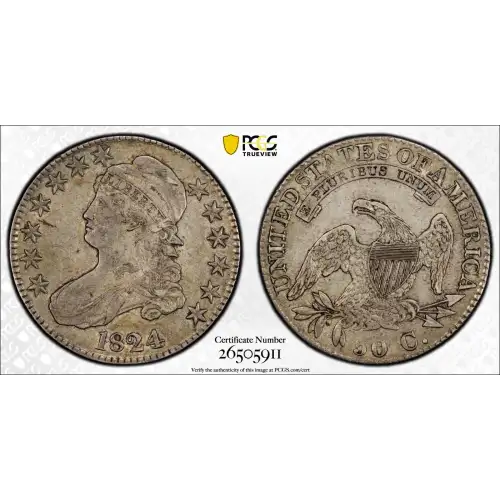
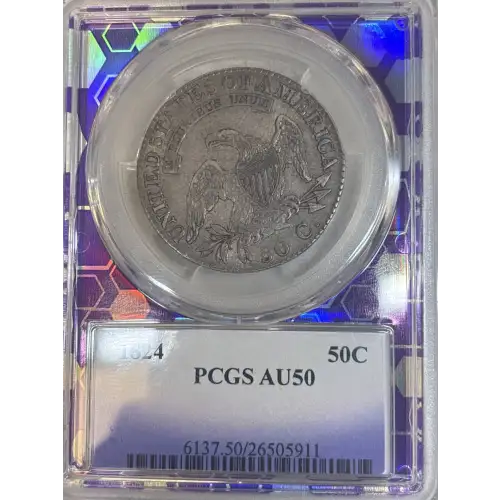
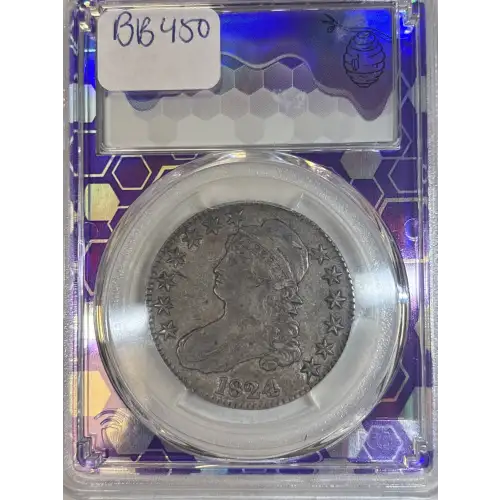
1824 Capped Bust Half Dollars PCGS AU-50
Category: Capped Bust Half DollarsDescription
1824 P Capped Bust Half Dollar - PCGS AU-50 Grade
The 1824 P Capped Bust Half Dollar represents one of the most iconic and historically significant coins in American numismatic heritage. This exceptional piece showcases the artistry and craftsmanship of early 19th-century American coinage, while serving as a tangible connection to the nation's formative years. The PCGS AU-50 grade indicates this coin remains in nearly uncirculated condition, preserving details and character that make it a prized addition to any serious numismatic collection.
Historical Significance of the Capped Bust Design
The Capped Bust Half Dollar series, produced from 1807 to 1839, represents a pivotal era in United States coinage design. The Capped Bust obverse, designed by the renowned engraver John Reich, replaced the earlier Draped Bust design and became synonymous with the expanding young nation. The design captures the essence of American ideals during a period of significant growth and development, shortly after the conclusion of the War of 1812.
The year 1824 falls within the latter portion of the Capped Bust series' production run, making it a particularly sought-after date among collectors. This year represents a transitional period in American coinage, with the half dollar serving as one of the primary circulating denominations in commerce across the expanding nation.
Design Elements and Artistic Merit
The obverse of the 1824 P Capped Bust Half Dollar features Lady Liberty wearing a Phrygian cap, a symbol of freedom that resonated deeply with American ideals. Her profile is rendered in profile facing left, with carefully detailed hair cascading over her shoulders. The inscriptions "LIBERTY" and the date "1824" complete the obverse design, framing Lady Liberty in a composition that emphasizes the principles upon which the nation was founded.
The reverse displays an eagle with wings spread wide, clutching arrows and an olive branch in its talons—symbolic representations of the nation's readiness for both war and peace. The eagle is encircled by a shield on its breast and is framed by the inscription "UNITED STATES OF AMERICA" along with the denomination "HALF DOL." The artistic execution of this reverse design showcases the exceptional skill of early American mint engravers.
The "P" Mint Mark Designation
The "P" designation in the listing refers to the Philadelphia Mint, the primary coining facility of the United States during this era. Philadelphia half dollars from 1824 represent significant portions of the year's total mintage, though survivorship rates in high grades remain notably scarce. The Philadelphia Mint was established as the nation's first mint and continues to maintain its status as a premier coining facility.
Condition and PCGS AU-50 Grade
A PCGS AU-50 (About Uncirculated-50) grade represents a coin that has seen minimal circulation, retaining exceptional detail and eye appeal. In this grade, the 1824 P Capped Bust Half Dollar would display sharp striking details throughout, with most of the original luster potentially visible in protected areas. The high relief areas may show light wear consistent with brief circulation or gentle handling, while the overall aesthetic remains decidedly near-mint in appearance.
The PCGS certification guarantees authenticity and provides third-party verification of the grade, offering collectors confidence in their acquisition. PCGS remains one of the most respected and recognized grading services in the numismatic industry, employing rigorous standards and advanced authentication techniques.
Numismatic Appeal and Collector Interest
The 1824 Capped Bust Half Dollar appeals to multiple collector demographics, from those focusing on early American coinage to specialists pursuing complete date runs of the Capped Bust series. The relative scarcity of high-grade examples, combined with the historical importance of the design and era, makes this coin a perennial favorite at major numismatic auctions and among serious collectors.
As part of the broader Capped Bust series, this half dollar represents an important chapter in American monetary history, issued during a period when the nation was establishing itself as an economic and political force. The coin serves as a physical artifact of American craftsmanship during the early republic era.
Investment Potential
Early American coinage, particularly well-preserved examples like this PCGS AU-50 specimen, has demonstrated consistent collector demand and appreciation potential. The combination of historical significance, artistic merit, and relative scarcity creates a compelling case for including this piece in a diversified numismatic portfolio. Key date and mint mark combinations within series have historically performed strongly in the marketplace.
Coin Specifications
- Year of Issue: 1824
- Mint Location: Philadelphia Mint (Denoted by "P")
- Denomination: Half Dollar (50 Cents)
- Design Type: Capped Bust
- Obverse Designer: John Reich
- Metal Composition: 89.24% Silver, 10.76% Copper
- Weight: Approximately 13.48 grams
- Diameter: 32.5 millimeters
- Edge: Reeded
- Grading Service: PCGS (Professional Coin Grading Service)
- Grade Assigned: AU-50 (About Uncirculated-50)
- Certification Number: Available upon verification
Silver Content and Precious Metal Value
Beyond its numismatic value, the 1824 Capped Bust Half Dollar contains significant intrinsic precious metal content. With its composition of 89.24% silver, this coin represents a tangible store of wealth in a form that has been recognized and valued for millennia. Collectors interested in both historical significance and silver bullion content find these early half dollars particularly attractive.
Care and Preservation
Proper handling and storage of this PCGS-certified coin ensures its preservation for future generations. The protective PCGS holder provides archival-quality storage that prevents environmental damage while allowing for authentication verification. Collectors are encouraged to handle certified coins minimally and maintain stable temperature and humidity conditions to preserve the coin's current state.
Conclusion
The 1824 P Capped Bust Half Dollar in PCGS AU-50 condition represents an exceptional opportunity to acquire a piece of authentic American numismatic history. Combining historical significance, artistic merit, precious metal content, and investment potential, this coin embodies the qualities that make early United States coinage among the most collected and respected series in the numismatic world. Whether you're an established collector seeking a key date for your collection or a newcomer to numismatics interested in exploring American coinage heritage, this 1824 half dollar offers both tangible and intangible value that transcends its monetary denomination.
Specifications
Related products