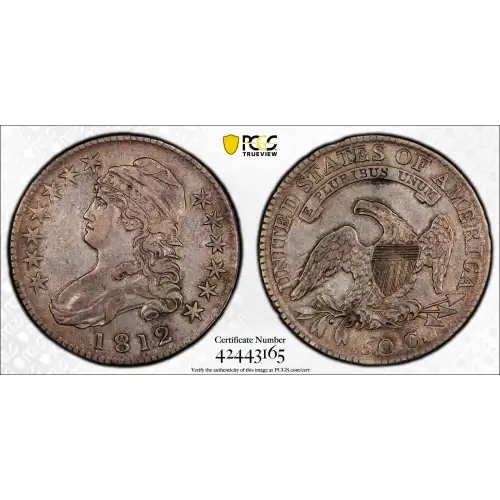
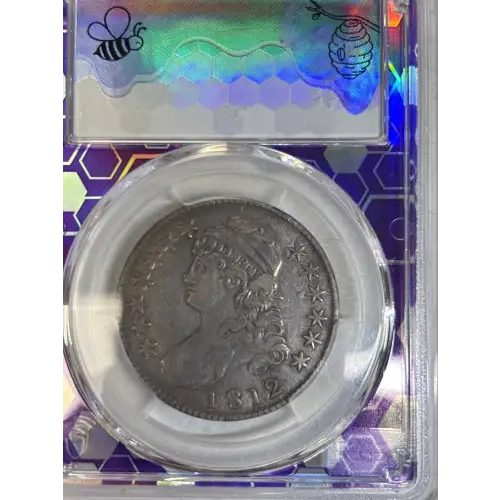
1812 Capped Bust Half Dollars PCGS XF-40 O-109a

1812 P Capped Bust Half Dollar PCGS XF-40 O-109a - Early American Numismatic Treasure

The 1812 P Capped Bust Half Dollar represents a significant chapter in American coinage history, offering collectors and investors a tangible connection to the early 19th century. This exceptional coin, graded PCGS XF-40 with the O-109a variety designation, is a highly sought-after piece that combines historical importance with numismatic appeal. Whether you're an experienced collector or beginning your journey into rare U.S. coins, this 1812 half dollar deserves serious consideration for your portfolio.

Coin Specifications

  • Year of Mint: 1812
  • Coin Type: Capped Bust Half Dollar
  • Mint Mark: P (Philadelphia Mint)
  • Variety: O-109a
  • Grading Service: PCGS (Professional Coin Grading Service)
  • Grade: XF-40 (Extremely Fine)
  • Metal Composition: 89.24% Silver, 10.76% Copper
  • Weight: 13.48 grams
  • Diameter: 32.5 millimeters
  • Designer: John Reich (obverse), Robert Scot (reverse modifications)
  • Edge: Reeded
  • Estimated Mintage: 1,628,059 coins

Historical Significance of the 1812 Half Dollar

The 1812 Capped Bust Half Dollar holds remarkable historical importance, as it was minted during one of the most pivotal years in early American history. The year 1812 marked the beginning of the War of 1812, a conflict that would test the young nation's resolve and shape its future. The coins produced during this period represent tangible artifacts from a transformative era in American development.

The Capped Bust design itself was introduced in 1807 and remained in production for several decades, making it one of the most recognizable and beloved designs in American numismatic history. This particular design celebrates Lady Liberty with her distinctive liberty cap, a powerful symbol of American independence and freedom. The reverse features an eagle with outstretched wings, representing national strength and sovereignty.

About the Capped Bust Series

The Capped Bust Half Dollar series, produced from 1807 to 1839, represents an important era in U.S. coin production. The series was designed by noted engraver John Reich, who crafted the iconic obverse featuring Liberty wearing a Phrygian cap. This design became synonymous with American liberty and remains one of the most celebrated and collected designs in American coinage.

The series experienced various modifications throughout its production run, with different varieties becoming increasingly important to serious collectors. These varieties, categorized through systematic studies of die combinations, represent subtle but significant differences in design elements, mintmarks, and die characteristics. The O-109a variety designation indicates a specific die pairing that numismatists and collectors have carefully documented and catalogued.

Understanding the XF-40 Grade

The PCGS grade of XF-40 (Extremely Fine 40) indicates a coin in exceptionally fine condition. At this grade level, the coin displays remarkable detail retention with only moderate wear visible on the highest points of the design. The obverse Liberty head retains excellent definition, with her facial features and the liberty cap clearly visible. The reverse eagle shows full detail in its wings and body, with only light wear on the most raised portions.

A coin graded XF-40 represents a sweet spot for many collectors—it offers substantial eye appeal and excellent detail while being more affordable than higher grades such as AU or MS conditions. The coin displays the patina and character that comes with age while maintaining the visual impact and design clarity that makes the Capped Bust series so compelling. For investors and collectors, an XF-40 example provides an outstanding balance of condition, price, and collectibility.

The O-109a Variety

The O-109a designation refers to a specific variety within the 1812 half dollar production. Numismatists have extensively studied Capped Bust half dollars, documenting the various die combinations used throughout the series. These die varieties can display subtle differences in design elements, spacing, and die characteristics that make them distinctly identifiable to trained collectors.

Understanding die varieties has become an integral part of serious numismatic collecting. Collectors who specialize in die varieties often pursue complete sets representing all known varieties for a particular date and mintmark. The O-109a variety is an important piece in any such collection, representing specific die work from the Philadelphia Mint in 1812.

Silver Content and Metal Composition

The 1812 Capped Bust Half Dollar contains 89.24% silver and 10.76% copper, making it a valuable bullion piece in addition to its numismatic merit. Half dollars of this era contain approximately 0.3869 troy ounces of pure silver. This substantial silver content provides inherent value that transcends the coin's collectible status, offering investors dual appreciation potential from both numismatic rarity and precious metal content.

Early U.S. coins like this 1812 half dollar represent some of the finest examples of American craftsmanship from the Federal period. The silver used in these coins was of high quality, and the reeded edges were designed to prevent the fraudulent removal of precious metal from the coin's edges—a common practice with smooth-edged coins in earlier centuries.

Why Collect 1812 Half Dollars?

Historical Connection: Owning a coin from 1812 connects you directly to a transformative period in American history. You hold an artifact that was in circulation during the War of 1812 and the early development of American sovereignty.

Design Excellence: The Capped Bust design is widely regarded as one of the most beautiful and artistic designs in American coinage history. The elegant rendering of Liberty and the powerful eagle reverse make these coins aesthetically exceptional.

Rarity and Scarcity: While over 1.6 million coins were minted in 1812, many have been lost, melted, or severely damaged over nearly two centuries. High-quality examples like this XF-40 have become increasingly scarce, making them valuable to collectors.

Investment Potential: The combination of numismatic value and silver content provides dual appreciation potential. As rare coin values continue to climb and silver prices fluctuate, these early American coins offer interesting portfolio diversification.

Collector Demand: The Capped Bust series remains among the most actively collected American coin series. Strong collector demand supports values and ensures liquidity when you decide to sell.

Condition and Authenticity Assurance

This coin has been professionally graded and encapsulated by PCGS, one of the world's most respected third-party grading services. PCGS employs rigorous standards and employs leading numismatic experts to ensure accurate grading and authentication. The certification number and grade are permanently recorded in the PCGS Population Report, providing verifiable documentation of this coin's authenticity and grade.

The certification provides peace of mind regarding the coin's authenticity and condition. The tamper-evident holder protects the coin while allowing full visibility of both obverse and reverse. PCGS certification is widely recognized and respected in the numismatic market, providing confidence in resale or inclusion in any collection.

Display and Storage Considerations

The PCGS holder is designed for display while providing optimal protection. The coin can be safely stored in a collection, safe deposit box, or home safe without requiring additional holders or protective measures. The clear plastic holder allows full appreciation of the coin's design and condition while shielding it from environmental damage.

For long-term preservation, store the coin in a cool, dry location away from excessive temperature fluctuations and humidity. The certified holder provides lasting protection, and the coin should not be removed from the holder to preserve both the condition and the certification grade.

Building Your Collection

Whether you're pursuing a complete set of Capped Bust half dollars, focusing on 1812 coins, collecting all O-109a varieties, or simply seeking exceptional examples of early American coinage, this 1812 P Capped Bust Half Dollar O-109a in PCGS XF-40 is an excellent addition. Its combination of historical significance, design quality, precious metal content, and numismatic appeal makes it a standout piece.

Rare coins have historically served as alternative investments and sources of cultural connection. The 1812 half dollar represents American heritage in tangible form, offering both educational value and investment merit. Collectors and investors worldwide recognize the enduring appeal of Capped Bust half dollars from the early Federal period.

Conclusion

The 1812 P Capped Bust Half Dollar PCGS XF-40 O-109a represents an exceptional opportunity to acquire a significant piece of American numismatic history. From its historical context during the War of 1812 to its outstanding artistic design and substantial precious metal content, this coin offers multiple compelling reasons for inclusion in any serious collection. The professional PCGS grading and certification ensure confidence in authenticity and condition, while the excellent preservation maintains the design's visual impact.

Don't miss the opportunity to own this exceptional early American half dollar. Whether you're an established collector, a history enthusiast, or an investor seeking tangible assets with enduring value, this 1812 Capped Bust Half Dollar merits serious consideration. Contact us today to learn more about this remarkable numismatic treasure and explore our complete selection of rare American coins.

Product ID 561993
Year 1812
Mint Mark P
Strike Business
Grade XF-40
Variety O-109a
Precious Metal Weight 0.38676 ozt Silver
Grading Agency PCGS
Specification properties No
Serial 42443165
Status Active
Designation -
Additional Info -

You must be authenticated to write reviews. Click here   to login.

There are no reviews yet. Be the first to write one!

1812 Capped Bust Half Dollars PCGS XF-40 O-109a

Category: Capped Bust Half Dollars

Call us at 563.332.9189 or email us at info@qccoin.com for more information.

Description

1812 P Capped Bust Half Dollar PCGS XF-40 O-109a - Early American Numismatic Treasure

The 1812 P Capped Bust Half Dollar represents a significant chapter in American coinage history, offering collectors and investors a tangible connection to the early 19th century. This exceptional coin, graded PCGS XF-40 with the O-109a variety designation, is a highly sought-after piece that combines historical importance with numismatic appeal. Whether you're an experienced collector or beginning your journey into rare U.S. coins, this 1812 half dollar deserves serious consideration for your portfolio.

Coin Specifications

  • Year of Mint: 1812
  • Coin Type: Capped Bust Half Dollar
  • Mint Mark: P (Philadelphia Mint)
  • Variety: O-109a
  • Grading Service: PCGS (Professional Coin Grading Service)
  • Grade: XF-40 (Extremely Fine)
  • Metal Composition: 89.24% Silver, 10.76% Copper
  • Weight: 13.48 grams
  • Diameter: 32.5 millimeters
  • Designer: John Reich (obverse), Robert Scot (reverse modifications)
  • Edge: Reeded
  • Estimated Mintage: 1,628,059 coins

Historical Significance of the 1812 Half Dollar

The 1812 Capped Bust Half Dollar holds remarkable historical importance, as it was minted during one of the most pivotal years in early American history. The year 1812 marked the beginning of the War of 1812, a conflict that would test the young nation's resolve and shape its future. The coins produced during this period represent tangible artifacts from a transformative era in American development.

The Capped Bust design itself was introduced in 1807 and remained in production for several decades, making it one of the most recognizable and beloved designs in American numismatic history. This particular design celebrates Lady Liberty with her distinctive liberty cap, a powerful symbol of American independence and freedom. The reverse features an eagle with outstretched wings, representing national strength and sovereignty.

About the Capped Bust Series

The Capped Bust Half Dollar series, produced from 1807 to 1839, represents an important era in U.S. coin production. The series was designed by noted engraver John Reich, who crafted the iconic obverse featuring Liberty wearing a Phrygian cap. This design became synonymous with American liberty and remains one of the most celebrated and collected designs in American coinage.

The series experienced various modifications throughout its production run, with different varieties becoming increasingly important to serious collectors. These varieties, categorized through systematic studies of die combinations, represent subtle but significant differences in design elements, mintmarks, and die characteristics. The O-109a variety designation indicates a specific die pairing that numismatists and collectors have carefully documented and catalogued.

Understanding the XF-40 Grade

The PCGS grade of XF-40 (Extremely Fine 40) indicates a coin in exceptionally fine condition. At this grade level, the coin displays remarkable detail retention with only moderate wear visible on the highest points of the design. The obverse Liberty head retains excellent definition, with her facial features and the liberty cap clearly visible. The reverse eagle shows full detail in its wings and body, with only light wear on the most raised portions.

A coin graded XF-40 represents a sweet spot for many collectors—it offers substantial eye appeal and excellent detail while being more affordable than higher grades such as AU or MS conditions. The coin displays the patina and character that comes with age while maintaining the visual impact and design clarity that makes the Capped Bust series so compelling. For investors and collectors, an XF-40 example provides an outstanding balance of condition, price, and collectibility.

The O-109a Variety

The O-109a designation refers to a specific variety within the 1812 half dollar production. Numismatists have extensively studied Capped Bust half dollars, documenting the various die combinations used throughout the series. These die varieties can display subtle differences in design elements, spacing, and die characteristics that make them distinctly identifiable to trained collectors.

Understanding die varieties has become an integral part of serious numismatic collecting. Collectors who specialize in die varieties often pursue complete sets representing all known varieties for a particular date and mintmark. The O-109a variety is an important piece in any such collection, representing specific die work from the Philadelphia Mint in 1812.

Silver Content and Metal Composition

The 1812 Capped Bust Half Dollar contains 89.24% silver and 10.76% copper, making it a valuable bullion piece in addition to its numismatic merit. Half dollars of this era contain approximately 0.3869 troy ounces of pure silver. This substantial silver content provides inherent value that transcends the coin's collectible status, offering investors dual appreciation potential from both numismatic rarity and precious metal content.

Early U.S. coins like this 1812 half dollar represent some of the finest examples of American craftsmanship from the Federal period. The silver used in these coins was of high quality, and the reeded edges were designed to prevent the fraudulent removal of precious metal from the coin's edges—a common practice with smooth-edged coins in earlier centuries.

Why Collect 1812 Half Dollars?

Historical Connection: Owning a coin from 1812 connects you directly to a transformative period in American history. You hold an artifact that was in circulation during the War of 1812 and the early development of American sovereignty.

Design Excellence: The Capped Bust design is widely regarded as one of the most beautiful and artistic designs in American coinage history. The elegant rendering of Liberty and the powerful eagle reverse make these coins aesthetically exceptional.

Rarity and Scarcity: While over 1.6 million coins were minted in 1812, many have been lost, melted, or severely damaged over nearly two centuries. High-quality examples like this XF-40 have become increasingly scarce, making them valuable to collectors.

Investment Potential: The combination of numismatic value and silver content provides dual appreciation potential. As rare coin values continue to climb and silver prices fluctuate, these early American coins offer interesting portfolio diversification.

Collector Demand: The Capped Bust series remains among the most actively collected American coin series. Strong collector demand supports values and ensures liquidity when you decide to sell.

Condition and Authenticity Assurance

This coin has been professionally graded and encapsulated by PCGS, one of the world's most respected third-party grading services. PCGS employs rigorous standards and employs leading numismatic experts to ensure accurate grading and authentication. The certification number and grade are permanently recorded in the PCGS Population Report, providing verifiable documentation of this coin's authenticity and grade.

The certification provides peace of mind regarding the coin's authenticity and condition. The tamper-evident holder protects the coin while allowing full visibility of both obverse and reverse. PCGS certification is widely recognized and respected in the numismatic market, providing confidence in resale or inclusion in any collection.

Display and Storage Considerations

The PCGS holder is designed for display while providing optimal protection. The coin can be safely stored in a collection, safe deposit box, or home safe without requiring additional holders or protective measures. The clear plastic holder allows full appreciation of the coin's design and condition while shielding it from environmental damage.

For long-term preservation, store the coin in a cool, dry location away from excessive temperature fluctuations and humidity. The certified holder provides lasting protection, and the coin should not be removed from the holder to preserve both the condition and the certification grade.

Building Your Collection

Whether you're pursuing a complete set of Capped Bust half dollars, focusing on 1812 coins, collecting all O-109a varieties, or simply seeking exceptional examples of early American coinage, this 1812 P Capped Bust Half Dollar O-109a in PCGS XF-40 is an excellent addition. Its combination of historical significance, design quality, precious metal content, and numismatic appeal makes it a standout piece.

Rare coins have historically served as alternative investments and sources of cultural connection. The 1812 half dollar represents American heritage in tangible form, offering both educational value and investment merit. Collectors and investors worldwide recognize the enduring appeal of Capped Bust half dollars from the early Federal period.

Conclusion

The 1812 P Capped Bust Half Dollar PCGS XF-40 O-109a represents an exceptional opportunity to acquire a significant piece of American numismatic history. From its historical context during the War of 1812 to its outstanding artistic design and substantial precious metal content, this coin offers multiple compelling reasons for inclusion in any serious collection. The professional PCGS grading and certification ensure confidence in authenticity and condition, while the excellent preservation maintains the design's visual impact.

Don't miss the opportunity to own this exceptional early American half dollar. Whether you're an established collector, a history enthusiast, or an investor seeking tangible assets with enduring value, this 1812 Capped Bust Half Dollar merits serious consideration. Contact us today to learn more about this remarkable numismatic treasure and explore our complete selection of rare American coins.

Specifications

Secure Transactions
Safeguarding Your Investments/Passion in Coins, Currency, or Bullion
We Buy Estates
We buy in-whole or in-part estates in 7 a state area.
Cash for Gold
Convert unwanted jewelry to cash or bullion
Your Cart


Continue to Checkout