- Gold Au $4380.45 $0.00
- Silver Ag $66.42 $0.01
- Platinum Pt $1817.16 $0.00
- Palladium Pd $1335.44 $0.00
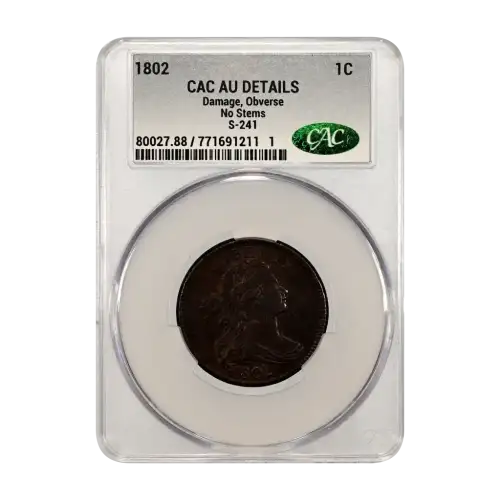
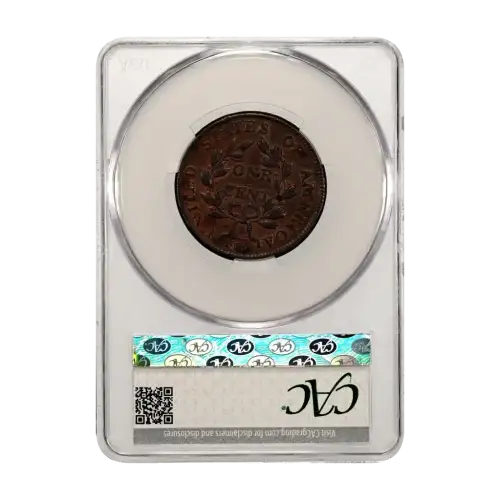
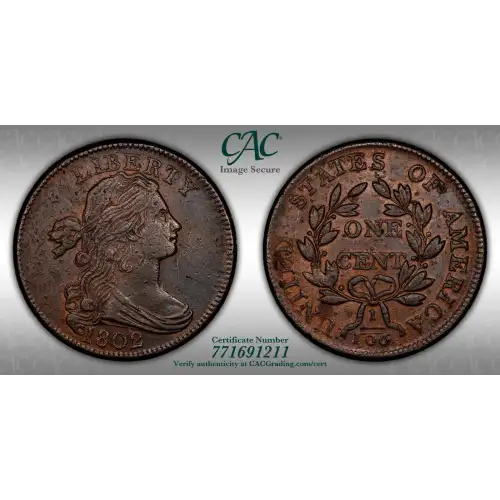
1802 Large Cents Draped Bust CACG AU Details BN No Stems S-241 CAC
Category: Large Cents Draped BustDescription
1802 Large Cents Draped Bust CACG AU Details No Stems S-241 BN
The 1802 Large Cent represents one of the most significant and historically important coins in American numismatic history. This particular specimen, graded by CACG as AU Details with the notable "No Stems" variety (Sheldon-241), offers collectors and investors an exceptional opportunity to own a piece of early United States coinage that exemplifies the craftsmanship and historical significance of the early federal period.
Overview of the 1802 Large Cent
The 1802 Large Cent was struck during the presidency of Thomas Jefferson, a period of significant expansion and change for the newly formed United States. This coin represents the continuation of the Draped Bust design, which had become synonymous with American copper coinage in the early 1800s. The Large Cent, which would remain in production with various design changes until 1857, served as the primary circulating cent denomination for nearly sixty years.
What makes the 1802 date particularly noteworthy is its historical context. Coming just after the Louisiana Purchase and during a period of relative prosperity, 1802 cent production reflected the nation's growing confidence and economic activity. The relatively modest mintage of these coins, combined with natural attrition over nearly two centuries of circulation, makes high-quality examples increasingly rare and valuable to modern collectors.
The Draped Bust Design
The Draped Bust design, which appeared on American cents from 1796 to 1807, was created by renowned engraver Robert Scot. This design marked a significant departure from earlier cent designs and has become one of the most recognizable and beloved designs in numismatic history. The obverse features Lady Liberty in profile, adorned with a Phrygian cap and draped clothing, symbolizing freedom and the ideals of the young republic.
The reverse of the 1802 Large Cent displays a wreath of laurel and palm, encircling the denomination and date. The "No Stems" variety, as designated by the Sheldon classification system, refers to the absence of stems on the wreath that bound the reverse design. This particular variety is significant among numismatists and represents a fascinating study in die variations and coinage production methods of the early nineteenth century.
Specifications and Grading Details
- Date: 1802
- Denomination: Large Cent
- Obverse Design: Draped Bust of Liberty
- Reverse Design: Wreath (No Stems Variety)
- Grading Service: CACG (Certified Acceptance Corporation Grading)
- Grade: AU Details (Almost Uncirculated Details)
- Variety Designation: S-241 (Sheldon Classification)
- Variety Description: No Stems
- Color Grade: BN (Brown)
- Metal Composition: 100% Copper
- Diameter: Approximately 28-29mm
- Weight: Approximately 10.89 grams
Understanding the AU Details Grade
The AU Details grade awarded to this 1802 Large Cent by CACG indicates a coin that demonstrates characteristics consistent with the Almost Uncirculated grade, meaning it shows minimal signs of wear from circulation. However, the "Details" designation suggests there may be some minor imperfections, such as cleaning, light scratches, or other factors that prevent it from receiving a straight AU grade without the qualifier.
Despite this technical designation, an AU Details coin remains highly desirable to collectors, as it represents an excellent example of the issue with strong eye appeal and significant numismatic value. The rarity of finding 1802 cents in this condition level makes this specimen particularly noteworthy.
The Significance of the S-241 No Stems Variety
The Sheldon Classification system, developed by renowned numismatist William H. Sheldon, provides a detailed cataloging of die varieties among early American cents. The S-241 designation specifically identifies this as the "No Stems" variety of the 1802 Large Cent, a distinction that is important to serious collectors of early copper coinage.
Die varieties occur when different dies are used in the coining process, resulting in subtle or sometimes more obvious differences in the final struck coins. For the 1802 Large Cent, the absence of stems on the reverse wreath represents a fascinating example of these die variations. Understanding and collecting die varieties has become an increasingly popular pursuit within numismatics, and this particular example offers an excellent entry point for those interested in this specialized collecting area.
Historical Context of 1802
The year 1802 holds significant historical importance in American history. President Thomas Jefferson had recently taken office, having won the contested election of 1800. His presidency would be marked by the Louisiana Purchase in 1803, which would double the size of the young nation and set the stage for westward expansion.
Economically, the early years of Jefferson's administration represented a period of relative stability after the tumultuous 1790s. The coinage produced during this period, including the 1802 Large Cents, reflects the nation's growing confidence in its monetary system and its place among the nations of the world.
Copper Cent Production in the Early 19th Century
The production of copper cents during the early nineteenth century represented a significant undertaking for the United States Mint. The Philadelphia Mint, the primary facility for cent production during this era, processed substantial quantities of copper into coinage blanks and struck them into finished coins.
The 1802 issue, with its moderate mintage, participated in this broader pattern of cent production. However, like all coinage from this period, natural attrition, melting, and loss have significantly reduced the population of surviving examples. Coins that were intended as everyday circulating media have, through the passage of time, become increasingly scarce in higher grades.
Collecting Early American Cents
Collecting early American Large Cents has long been a passion for numismatists of all levels. These coins offer numerous advantages as collectible items: they are relatively affordable compared to other early American coinage, they display excellent artistic merit in their designs, and they provide tangible connections to early American history.
The Draped Bust series (1796-1807) occupies a special place in the hierarchy of cent collecting, as these coins are rarer than the subsequent Classic Head series (1808-1814) and earlier than the scarcer Flowing Hair cents (1793-1795). This makes them an attractive focus for collectors seeking a balance between rarity and affordability.
Grading and Authentication
The CACG certification on this 1802 Large Cent provides authentication and grading from a reputable third-party grading service. CACG employs experienced numismatists who evaluate each coin according to established standards, examining factors such as wear patterns, surface preservation, strike quality, and centering.
The brown (BN) color designation indicates the natural patina that has developed on this copper coin over more than two centuries. This warm, natural coloration is typical of uncleaned early copper cents and is highly valued by collectors who appreciate the historical integrity of these pieces.
Investment and Collector Potential
Early American cents, particularly those from the Draped Bust series, have demonstrated consistent collector demand and appreciation over the long term. These coins appeal to multiple categories of collectors: those focused on early American history, die variety specialists, type collectors seeking examples of important designs, and investors seeking tangible assets with historical significance.
The combination of historical importance, relative rarity, and strong eye appeal makes the 1802 Large Cent an attractive addition to any collection of early American coinage. This particular example, with its AU Details grade and documented S-241 variety designation, represents excellent numismatic value.
Condition Considerations
The AU Details grade assigned to this coin indicates that it has survived two centuries in remarkably good condition. The vast majority of 1802 Large Cents encountered today show considerably more wear or have been damaged through cleaning or environmental exposure. Finding an example that has retained this much of its original surface and detail is a notable achievement in the preservation history of early American coinage.
The brown patina visible on the coin is natural and expected for early copper cents that have not been improperly cleaned. This patina actually serves as a protective layer for the underlying copper, helping to preserve the coin for future generations.
Why Choose This 1802 Large Cent?
This 1802 Large Cent S-241 BN represents multiple compelling reasons for acquisition. It is a coin with historical significance, being struck during an important moment in American history. It displays one of the most artistically appealing designs ever featured on American coinage. It represents a specific and collectible die variety within the broader category of 1802 cents. It has been properly authenticated and graded by a respected numismatic authority. And it remains in genuinely scarce condition that reflects both its age and the vicissitudes of time.
Whether you are an experienced numismatist adding to an advanced collection, a history enthusiast seeking a tangible connection to early America, or an investor diversifying into alternative assets with inherent historical and aesthetic value, this 1802 Large Cent merits serious consideration.
Conclusion
The 1802 Large Cent Draped Bust CACG AU Details No Stems S-241 BN represents an exceptional example of early American coinage that embodies the artistry, historical significance, and numismatic importance that make collecting these pieces so rewarding. Its rarity, certification, and documented variety make it a valuable addition to any collection of early American coins. Don't miss the opportunity to own this piece of numismatic history.
Specifications